Sunday, August 27, 2006

Volcom Escramble World Premier. Valient Thorr Gets Political; Dance Tent Gets Freaky

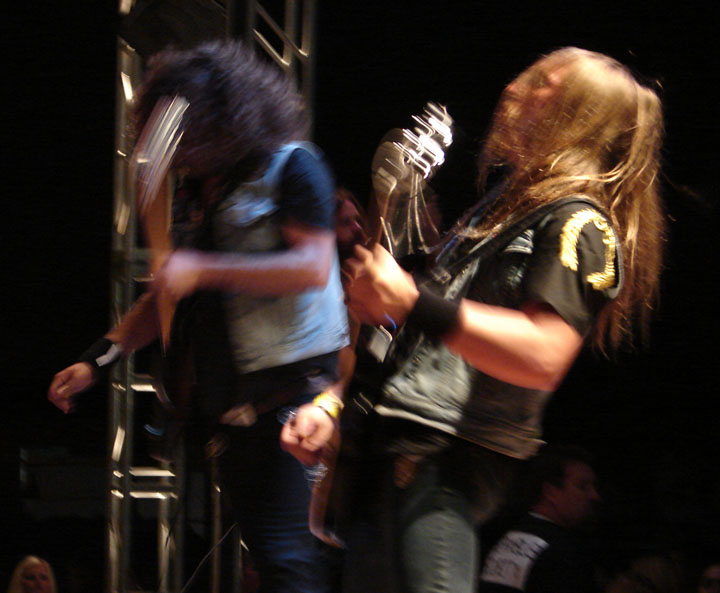
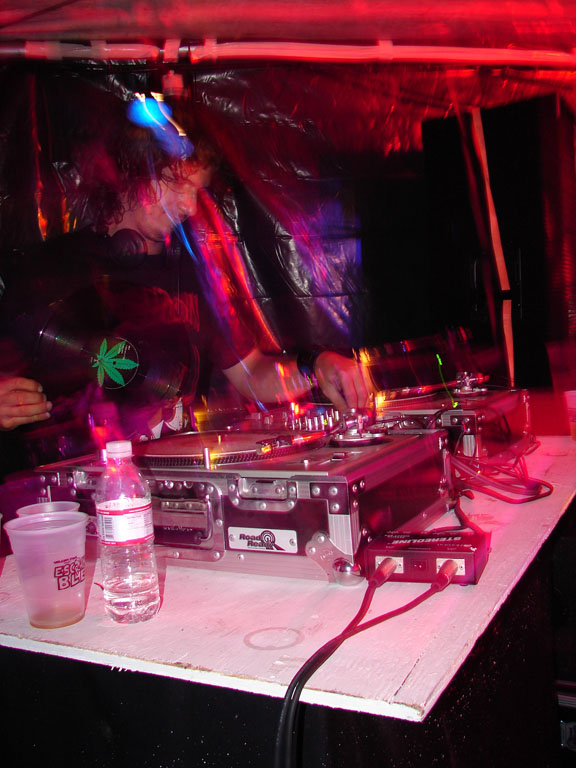
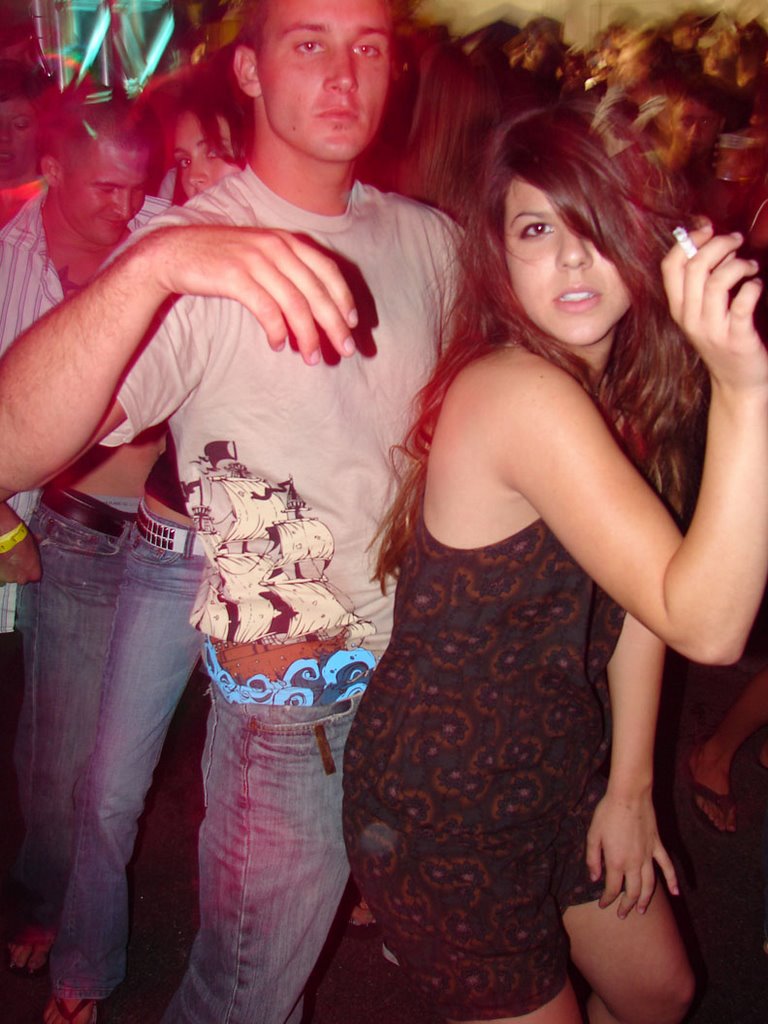
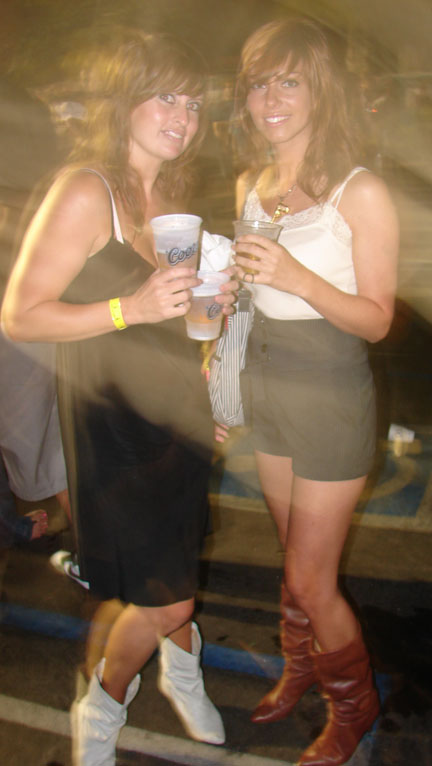
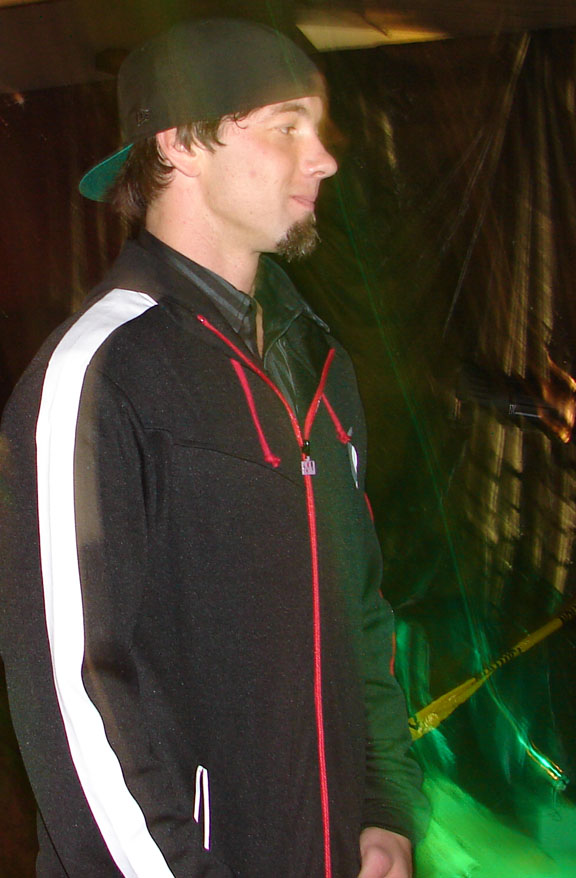
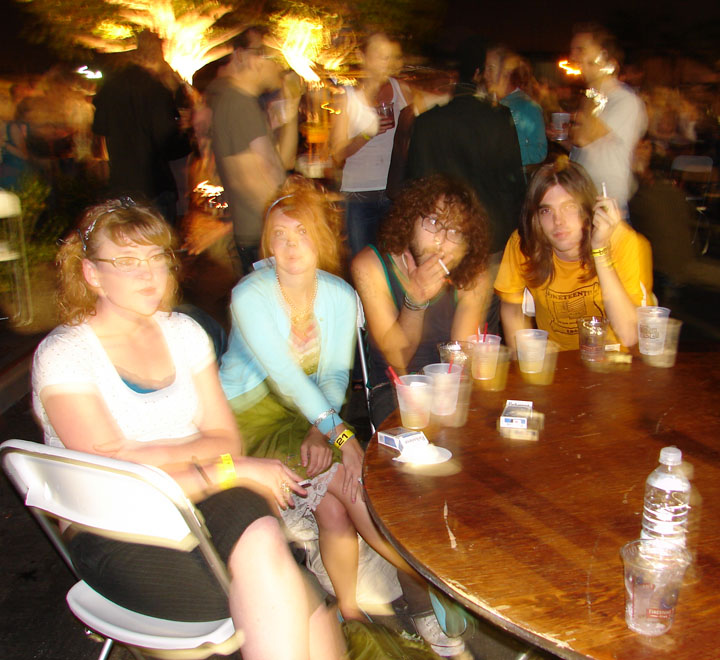
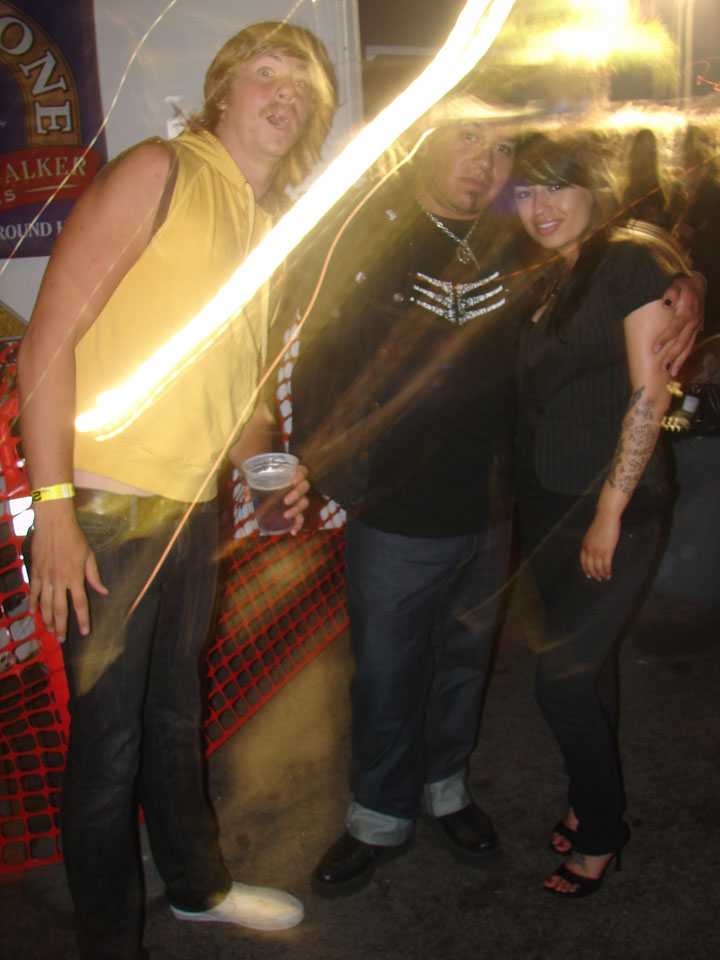
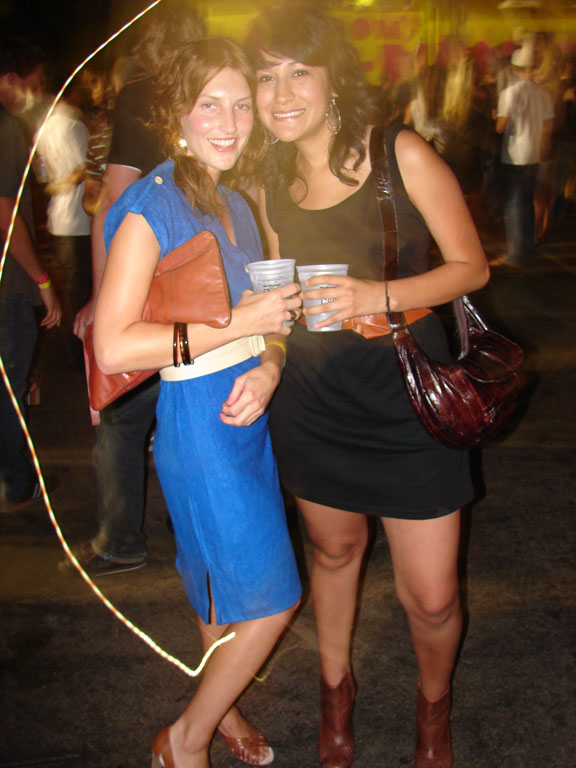
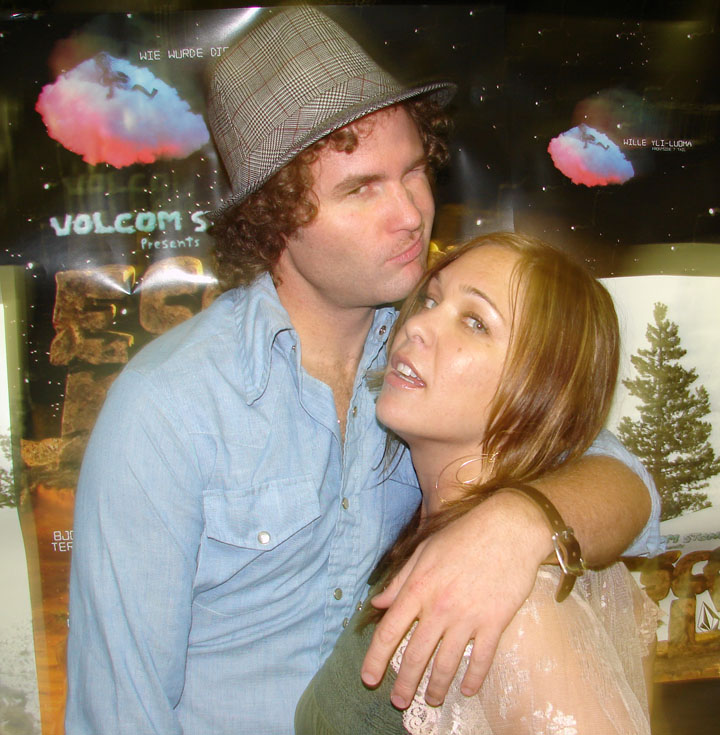
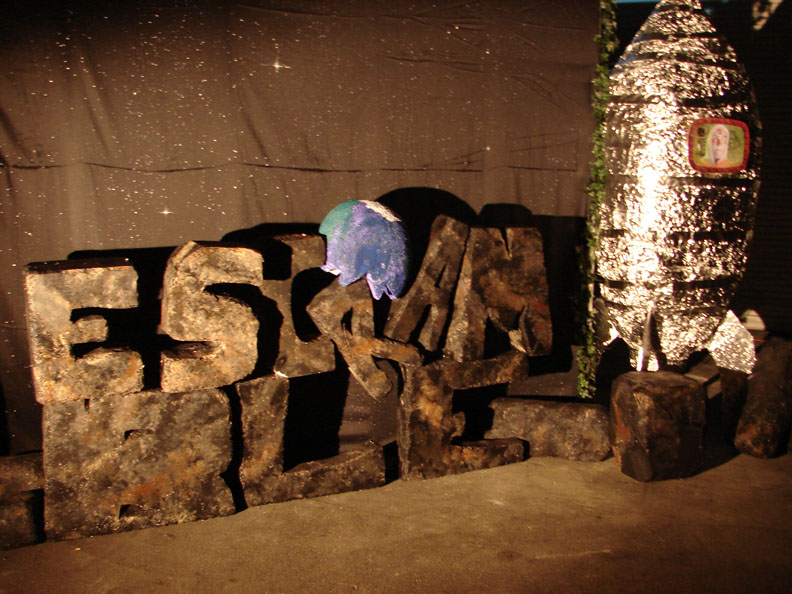
It was off to Volcom Headquarters in Costa Mesa Saturday Night in celebration of Escramble. Volcom parties are a 15-year-olds wet dream. So easy to booze. Lots of "over 21" wrist bands getting passed from skinny wrist to skinny wrist. Escramble was a snowboarding project two years in the making. The movie documents snowboarding with a tripped-out, revivalist feel. Goes little on rails and heavy on big mountain and comes as a breath of fresh air in a sport presently overrun by street style. BJORN Leines has a standout part, and a reunion with snowboard legends Terje, Guch, and Jamie Lynn are highlights. Props to Volcom Snow Team Manager Billy Anderson for the vision on this.


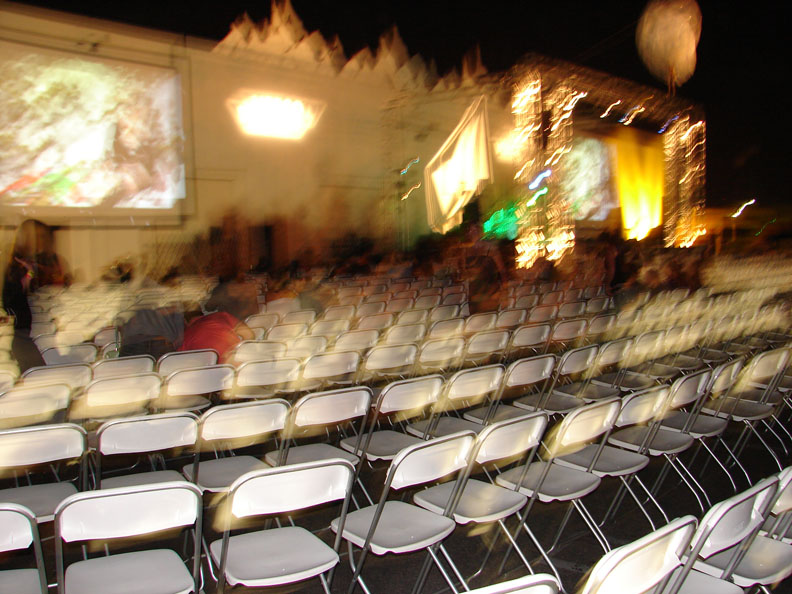
Before the movie.

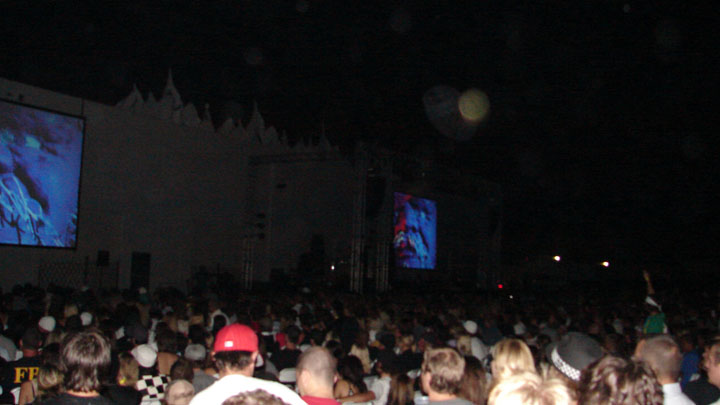
During the movie.

After the movie.

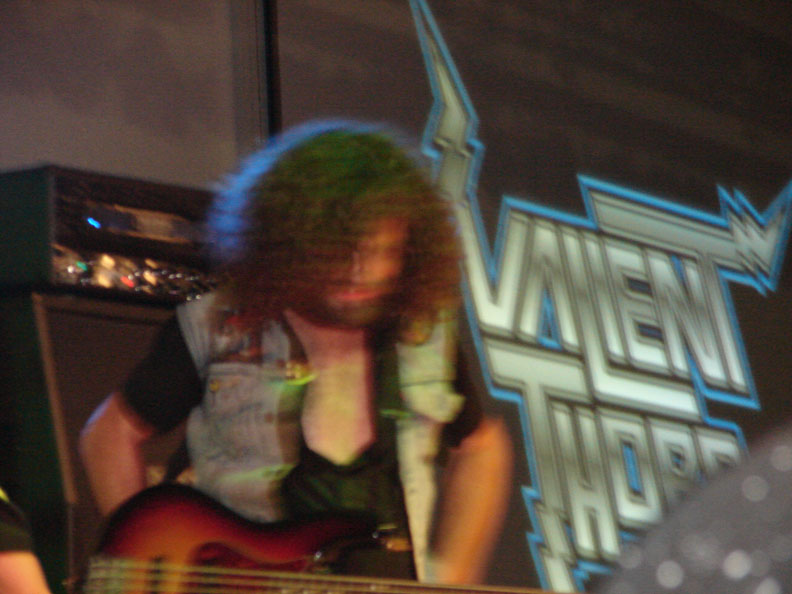
Ask Valient if he gives a fuck.


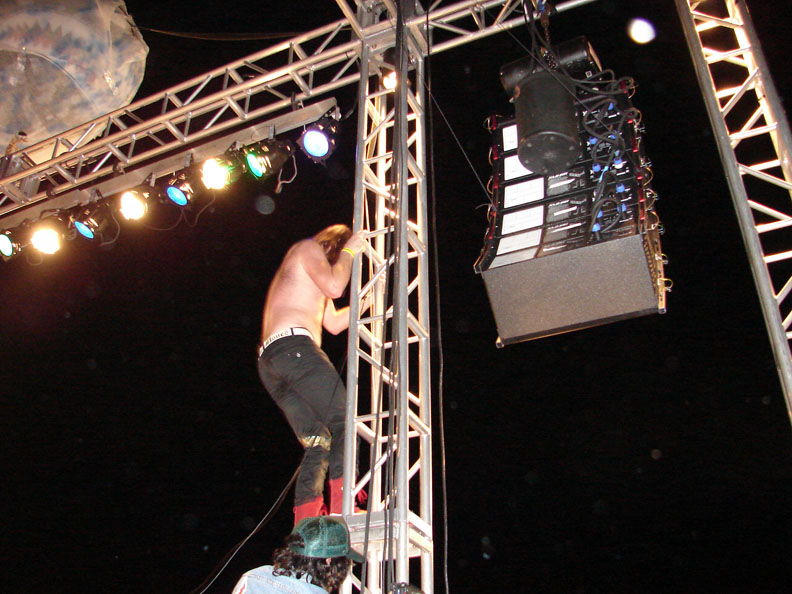
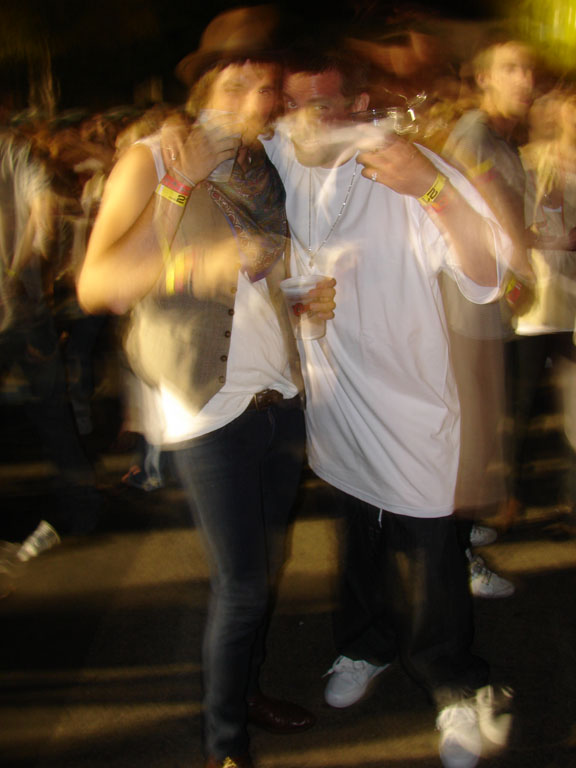
Way, way after the movie. Sweatin' it in the dance tent.


Pro Shred Keir Dillion is plunging into TV land. Interviewing lead cinematographers of Escramble, Garry Pendygrasse, front, Nathan Yant, back.


Jamie Lynn.


Saturday, August 19, 2006

Future of Style Store Gets Down With Art Party at New Hillcrest Location

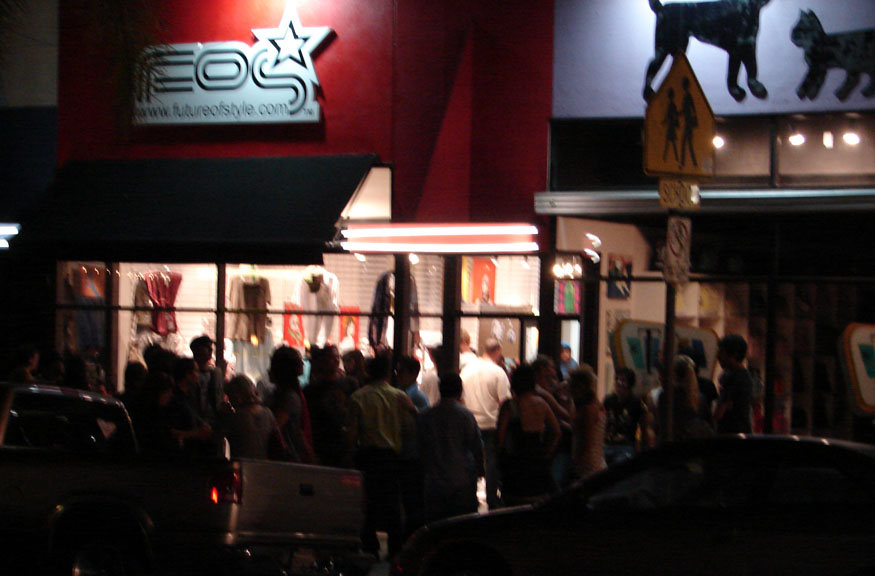
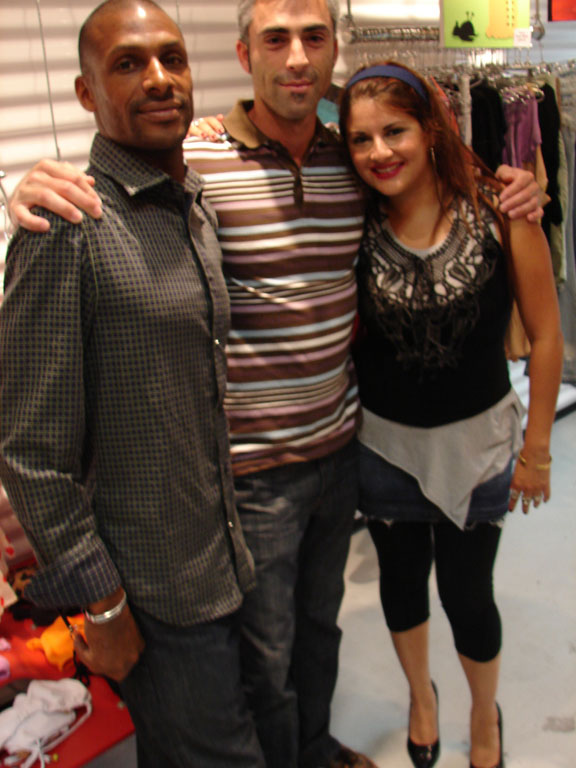
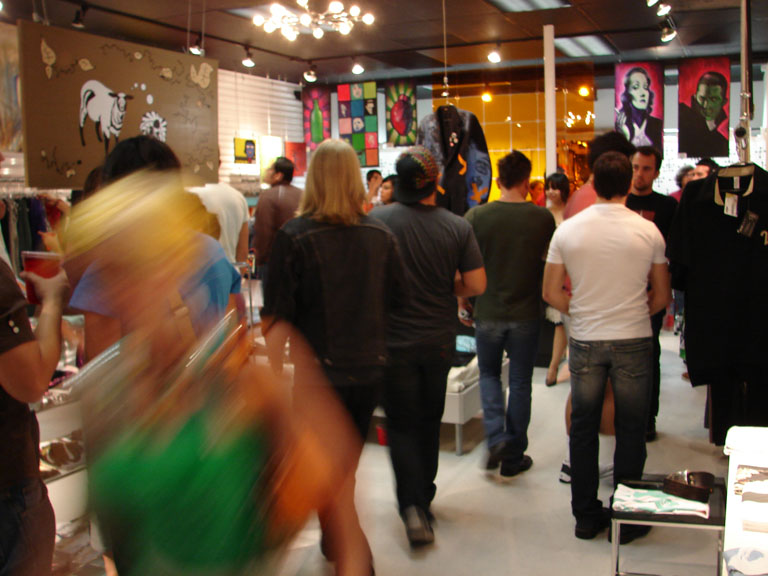
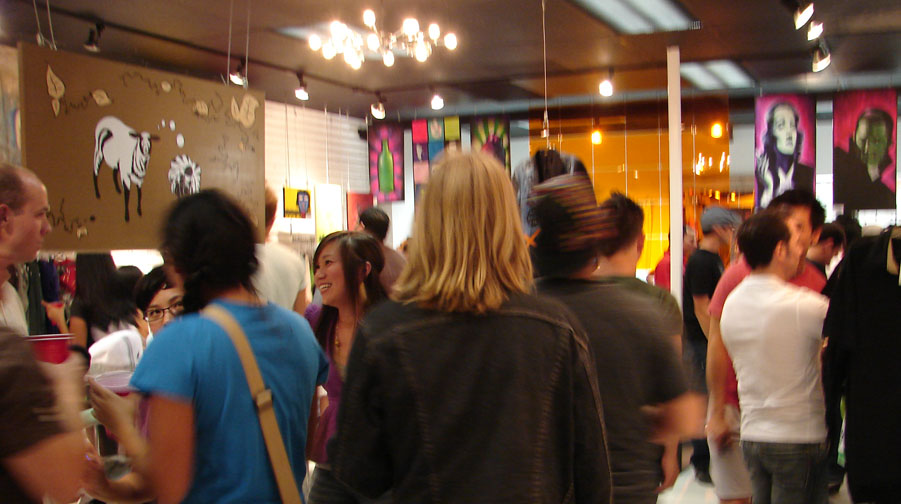
It was poppin' Friday night at the Future of Style Art Party in San Diego's Hillcrest neighborhood.


Future of Style carries labels like Temple Effectives, Soul Rebel, Upper Playground, Doe, and Spoon Fed. Urban style shit. Hard to find tees, tops, Kangols.

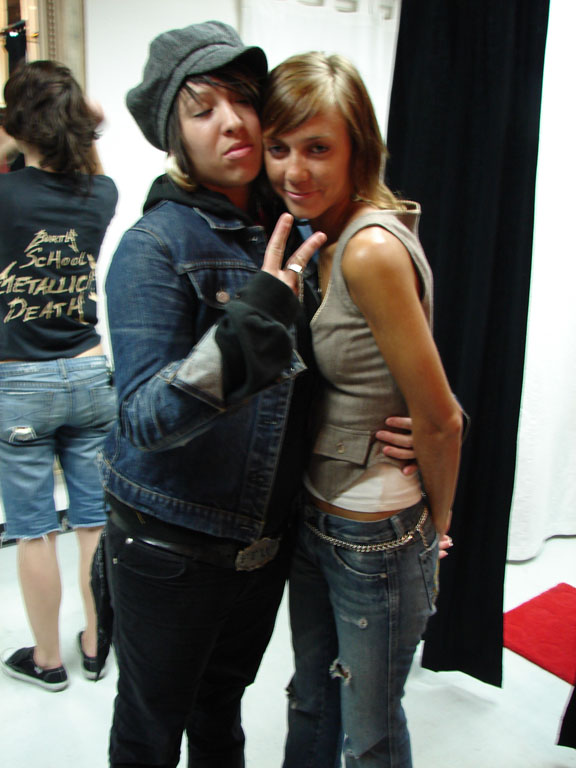
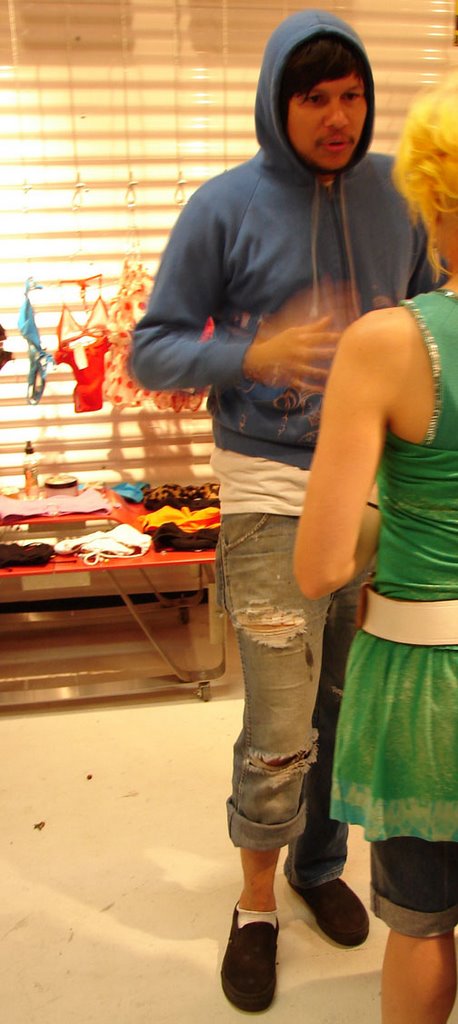
The cute dirty blond on the right was like, "What's this for and why do you want to take my picture." I was like cause you're hot and I want to post on craigslist with it. "As long as I look cute," she said. Check out the hot girl with the Meticalla shirt in the background. I bet she's in a bike gang. Grrr.


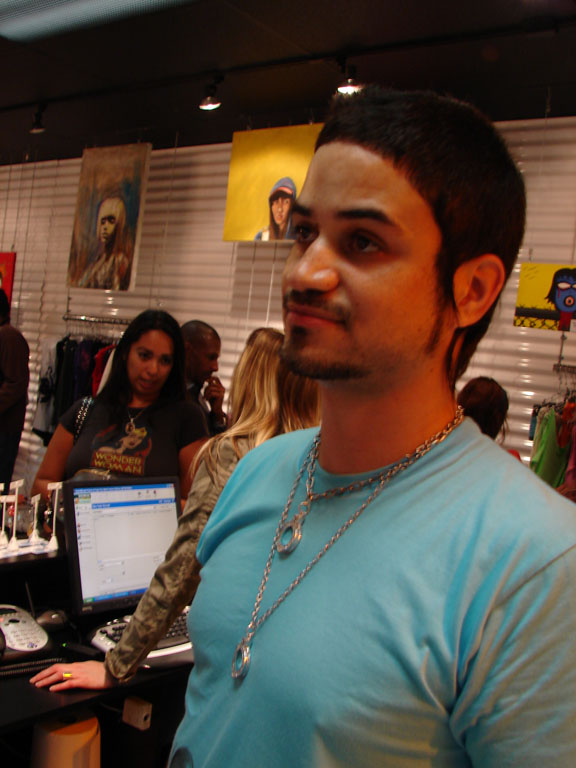
This is Dimas De La Cruz. He owns the store and this night he kept it trill on the ones and twos. Check out his handcuff necklace. And the haircut. This girl Christina from Jet Rhys down the street "sometimes" cuts his hair, but she's all big time and you've got to have cash for her cuts -- even if you're Dimas and you can do some store bartering.


I don't think I have to point out who has the best Fuck Me eyes.

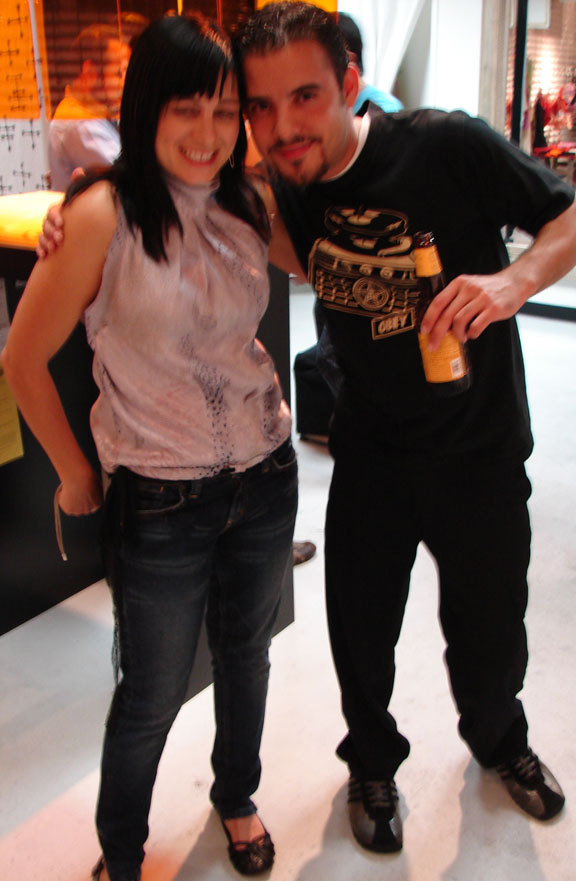
Although Autumn Rose was visiting from San Francisco and had just met Abel, a DJ from North Park, only minutes before I snapped the photo, they actually look like they could be a couple. In fact, I could totally picture them dah dah dah doing it.


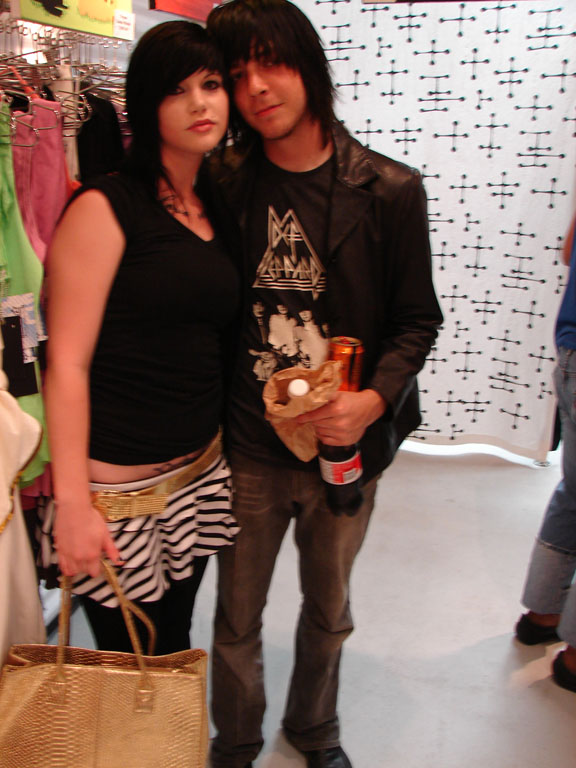
Black hesher hair. Check. Vintage Def Leppard shirt. Check. Brown bag full of booze. Check, motherfucker, check. Well done, my man.


She'll shotgun a sixpack faster than you, hold it better than you, and woo your parents when you take her home.

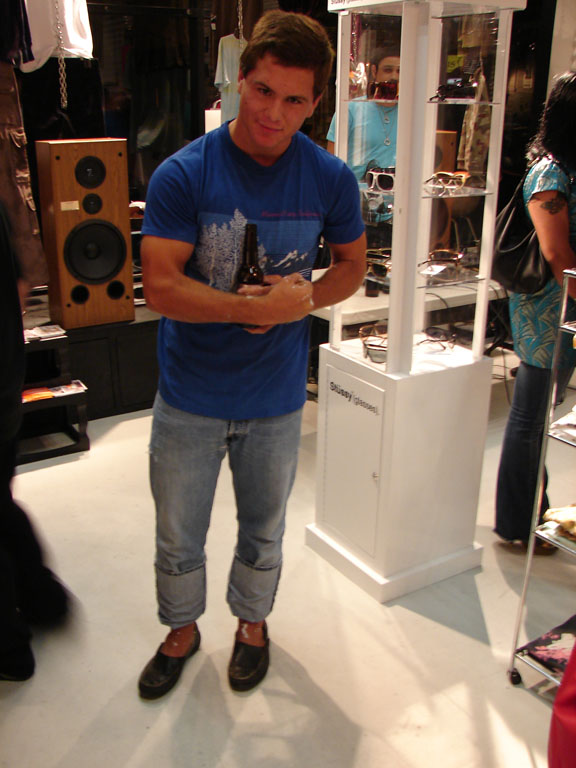
Love the loafers. And the speckles of paint on your hands and ankles? Hell yes. Even though you weren't a featured artist at the party, if some girl was checking you out, she'd probably assume you were and that's all you need player, assumptions.

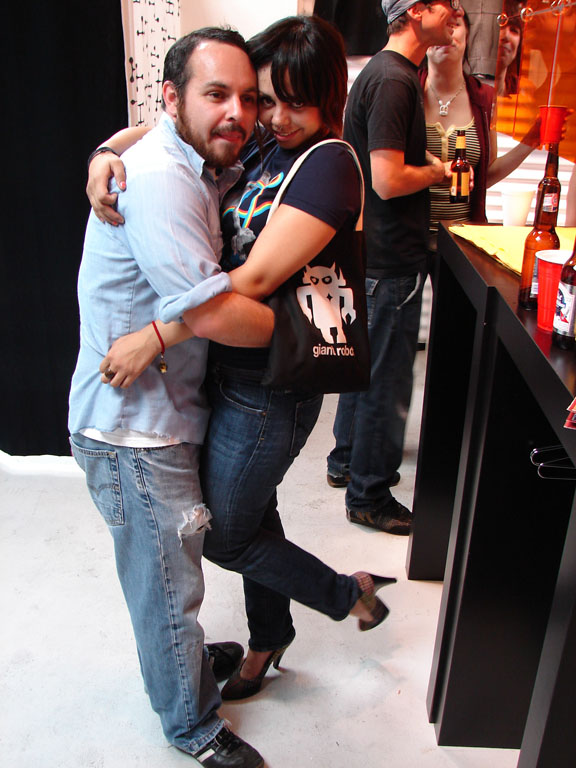
Is that a Giant Robot bag or are you just happy to see me?


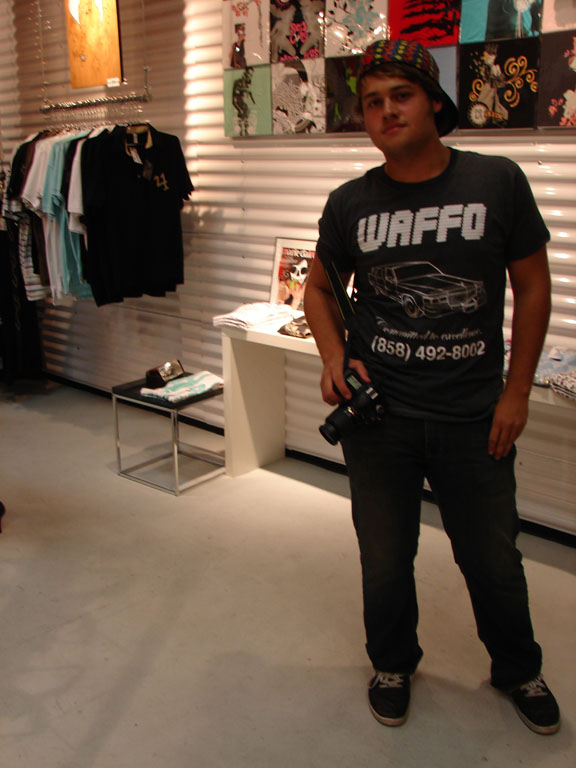
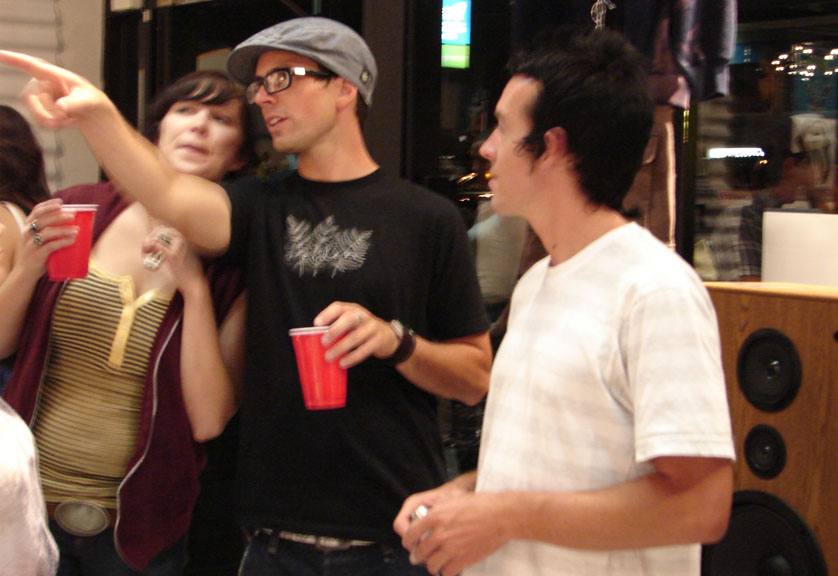
Sean Carney, one of the featured artists of the evening. I was digging his WESC glasses. Big points for that label.

How shopping should always be.


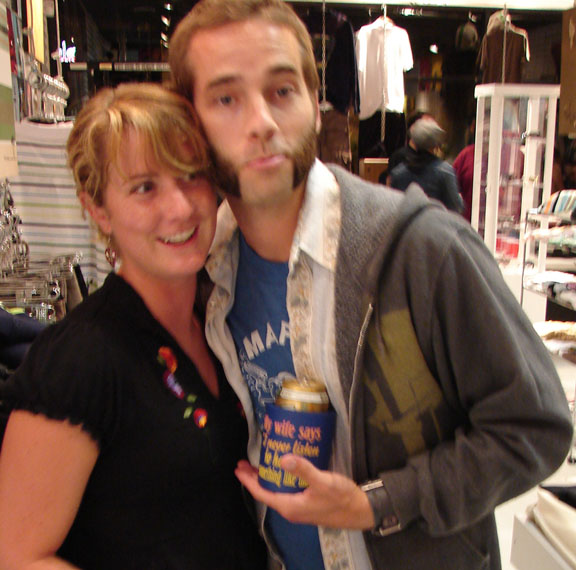
You want to know the secret to being cool? Not giving a fuck. Not only does this dude have the balls to rock the mutton chops, he also brought his own beer cozy.


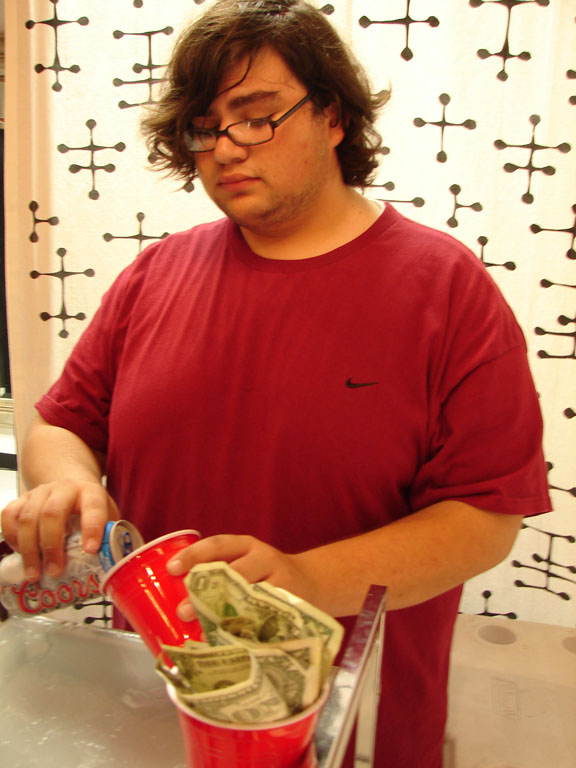
This is Dimas' right-hand man. This night he was the bartender -- but supply was in short and it wasn't long before he was relieved of his duties. Fortunately, people kept arriving with alcohol reinforcements.


Is this chick flipping me off or is she beckoning me with her finger, "C'mere camera boy, I'll give you something to take a photo of..."

Thursday, August 10, 2006

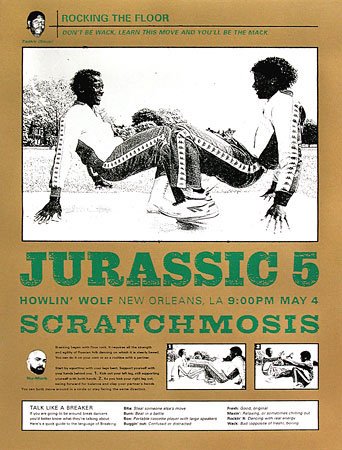
The World as Jurassic 5 Knows It

MCs Charli 2na and Zaakir discuss growing up, the state of hip-hop, and action sports.


Somewhere after the era of Boogie Down Productions but before the rise of Tupac Shakur, rap culture caught the ever-spectacle seeking eye of mass media. Rap was taken and packaged as a story of disenfranchised urban kids telling lyrical stories about the grim realities of ghetto life. So-called “hard-core” rappers were bringing the news no one else could deliver. It was a gun-clapping, murderous, sexist, drug-laden documentary marketed to suburban middle class kids. The gangsta rap scene had exploded, and their lyrics and claimed “ways of life” challenged everything from American values to the First Amendment.

But there was another side to hip-hop. Behind the commercial wall of gangsta rap a new breed of hip-hop was slowly gaining force against the popularized version of inner-city criminality. In the late 1980s, MC groups like the Roots, the Jungle Brothers, De La Soul and its Daisy Age, began to offer a positive alternative to the thug-riddled vision of gangsta rap.

In this tradition was born Jurassic 5. Formed in 1993, the sextet (yes, six members, not five) have been fighting the ‘ghettoized’ image of rap ever since. "What we do is try and give you something you ain't used to," raps Jurassic 5. In the current bevy of bling, Jurassic 5—MCs Chali 2na, Zaakir (Soup), Akil and Marc 7 and DJs Cut Chemist and Nu-Mark—keep to rapping within reality. From taking care of kids to needing a tune-up for a Toyota Corolla hatchback (try and get 50-Cent to get in a car like that), the mundane is their subject. “We’re not trying to fool anybody,” says Chali 2na. “Those guys are just renting those mansions for those videos.”

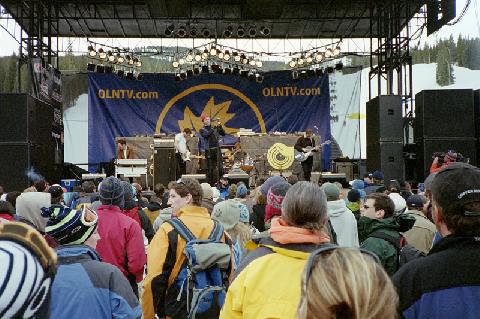
For years, Jurassic 5 has been playing in the decks of snowboarders and freestyle skiers, skater and surfers. That’s why when Gravity Games booked the Los Angeles based group, they were more than happy to make the trip out to Colorado. Before their show, I sat down with MCs Chali 2na and Zaakir (also known as “Soup”) to talk about their lives growing up, how the group got started, the current state of hip-hop, and why those of us in action sports like them so damn much.

Ed Note: This interview took place back in 2005. J5 has since released their new album, "Feedback." To read a review--they haven't been pretty and this one is no exception--click
  • here


  • Before there was Jurassic 5, there were two groups. Zaakir, you were from Rebels of Rhythm, along with Akil. You met Charli 2na’s group, Unity Committee, at the now-defunct Good Life Café in Los Angeles. You want to shed some light on this coming together?

    Zaakir (Soup): The year was 1993. We were up at the Good Life Café, which was like the LA Mecca for MC’s to go out and show exactly what they had. To get on and get deals there was a whole lot of stuff you could do at the Good Life. You could eat healthy; you could try and get females—everything. Anyway, we had seen Unity Committee perform, and at that time it was real competitive, but Unity—they were like one of the only groups that seemed to speak to us.

    Charli 2na: That’s right. It was a positive energy. Something that felt right.

    Zaakir: When that happened, we just bonded. But it took a minute. It didn’t just happen overnight. One day Cut Chemist finally a beat that we all took to, and we eventually went up to the Good Life to perform it. We called ourselves Jurassic 5. I would have never imagined in a million years that this collaboration would have led to us going around the world. This type of success was not at all on our minds. We just wanted to go perform at the Good Life! [Laughing] That was it. To perform at the little Café and have people say ‘oh! That was dope!’ -- That was our gold platinum record. Leave it at that. Then it was just like a light came on, and decided, ‘hey, let’s put this track out ourselves.’ At that time I was working for a record company so I could get the 12-inch to people that I knew would play it. As opposed to saying, ‘oh, I got it’ – and then throw it away. And then it just snowballed, all the way to this -- all the way to Gravity Games.

    Charli 2na: Snowballed [Mimicking a big snowman with his body].

    Zaakir: Big ol’ snowman snowballs! [Throwing his arms out]. Yeah! The original.


    Let’s talk about the Gravity Games. A huge number of Snowboarders and skiers embrace hip-hop, yet the stories you tell in your music have no direct connection to winter or action sports in general. Why do you think our sports are so passionate about hip-hop music?

    Charli 2na: Music is…universal. It is a language unto itself. The music that we have done has taken us around the planet. We’ve chilled and bonded with people who can’t even speak our language because they like our music. For us to even know that extreme sports cats like our music—man, that’s great. We’re from the urban area. We aren’t up in this ‘snowman’ skiing and stuff. We never had that. But we’re glad to connect.

    Zaakir: It goes like this. Last black man I knew that skied was…nobody!

    [Everyone laughing at Zaakir’s comment.]

    Charli 2na: No, really, though [Silencing Zaakir]. We don’t know anything about the snow. It’s both a shock and pleasant surprise to know that snowboarders be loving our style. I put it together as a ‘pleasant shock.’ It’s one of those things you don’t expect. It’s great because it shows our music is able to touch people above and beyond the situation that we came from.

    Zaakir: Yeah, that’s right.

    So would you guys rather snowboard or ski?

    Charli 2na: Ah, man. Get me on a board. Watch me kill myself trying those crazy flips.

    Charli 2na


    That’s cool. Maybe you guys can compete in the halfpipe next year.

    Charli 2na: Now you’re talking crazy.

    [Everyone laughing.]

    Zaakir: Nah, it’s great. I love the fact that snowboarders embrace us. As long as they embrace us is as long as we’re going to keep doing stuff like this, coming out to the Gravity Games and hanging out with you cats.

    What about family? Do you think your upbringing has influenced the type of music you guys are producing these days?

    Charli 2na: Yeah, in a lot of ways. I think so.

    Zaakir: I think however you turn out in life has a lot to do with your family. Family is where you originate. But it’s not to say that it is the fault of parents, you know, if you turn out to be a crook.

    What were you guys like as kids, growing up?

    Zaakir: I was actually a good kid. I never got in trouble. You couldn’t go to a precinct in the United States and find a picture of me boy!

    [Big laugh from Charli]

    Zaakir: Or fingerprints! Nothing! No, for real -- I had a father who was not having it. All the little stuff I used to try to get away with, my father would step in and tell me, ‘nah, boy, that’s not the route to go. Let me show you the route to go.’ And I appreciate how my father treated me so much. Now I have two kids of my own and I do everything I can to make sure they have the same guidance my father gave to me. I owe a lot to my mother too. But I think it’s important about my father because in the black community there is this stereotype that the father is never there for their children. But I’m an exception to that story. And now, my son, when he grows up, can know that he is an exception to the story. And hopefully my son will carry these values on.

    So you were a good kid, never did anything wrong?

    Zaakir: Yeah, overall, I was a good kid. I wasn’t an overachiever. I did just enough to get by. And look where it got me—to the Gravity Games and other world-wide events.

    What about you Charli? Where you the angel Zaakir was?

    Charli 2na: Nope. My mom and pops—they were criminals. That’s the only way I can put it. I learned about the negative aspects of life because it was right there, staring me in the face. For me, I never wanted to emulate the things that I saw bring a terrible result. I had all kinds of crazy people living around my life. I saw people die. I saw people get strung out on drugs. I saw cats selling drugs get shot over stupid disputes. For me, I never wanted that—as a life, as a person, or for my family. My father wasn’t there. He skirted when I was eight. It took years for me to go back and find him and then forgive him. At any rate, they say you are doomed to repeat your parents past if you don’t recognize the mistakes. I’m a living example of this. I recognize the mistakes of my father, my mother, my uncles, cousins, whatever—I try to recognize those mistakes. I told myself I’m not going to go that route. And look where it got me...the Gravity Games.

    Zaakir: With the snow! [Laughs.]


    Fast forward to when you guys joined up to form J5. How did you guys develop the ‘alternative’ sound—[Charli breaks in.]

    Charli 2na: Now hold up. That’s a trip that you say that. We are ‘alternative’ – to what? For us, we feel like we are regurgitating the stuff that we fell in love with.

    Right—like a revivalist style. I mean alternative to the commercial sound that currently dominates.

    Charli 2na: Right—we’re doing the ‘original’ hip-hop. We’re bringing back the old school styles. What I’m trippin’ on is how you label us ‘alternative’ hip-hop. You’re thinking we are alternative to the crap that’s out there right now. But in actuality, it’s that commercial junk that is alternative to us, real hip-hop for real people with brains and a genuine love for music. We attribute our stuff to the old school cats—our shows, our music, and our vibe—to the cats like the Furious Five. Brother, I didn’t mean to cut you off, but just the word ‘alternative.’ I had to address that [laughing].

    No. That’s cool. Alternative is just what came off my tongue. I guess what I’m trying to get at is what you mentioned about the ‘other stuff,’ the crap—or what you think should be labeled as the ‘alternative’ sound, the opposite of what, to you, hip-hop truly represents. Let me just throw the big question: What is the state of hip-hop today?

    Zaakir: The state of hip-hop, right now, for me is … I’ve seen better [Making a sour face]. I don’t want to totally shit on it, but at the same time I wish people would try to do exactly what they feel as opposed to what other people are dictating to them. I know deep down inside that these are a lot of creative people. Everybody has something they want to do that the masses are not going to agree with, whatever it may be. I would like to see more of that, people expressing themselves without the fear that their records won’t sell because they aren’t doing exactly what everyone else is. At the same time, I would have never thought in a million years that hip-hop would turn into this big, global, world-changing type of music. I remember when people were saying hip-hop wouldn’t last! Crazy cats! Hip-hop has come a long way, and with that I cannot totally dismiss what some folks are doing, even if I myself don’t agree with it. I do wish people would be more creative, and with that, more creative control. Nobody above dictating, because the consumer is going to buy it—we are living proof. No more corporate control. That’s what’s bringing hip-hop down. The corporate world doesn’t give a crap about music or our culture. They care about money.


    OK. Let’s talk about creativity. Put me in the mind of Jurassic 5, when you are all trying to come up with new material.

    Zaakir: [To Charli] Hey man, what’s your verse sound like?

    Charli: [To Zaakir] It sounds like this. What’s your verse sound like?

    [Both laughing at each other.]

    Charli 2na: Oh, man. Every possible way of doing it we’ve probably done it. We don’t have a set way of creating music, no ritual or anything. We get hyped on a beat or somebody will have a chorus or somebody will have a verse or idea, and that just sparks a song. We have taken months to write one song and we have taken ten days to write ten songs.

    Zaakir: When you have six people, it’s really hard to get a formula. The formula is not to have a formula. Therefore with six people you can still be an individual. It’s a balance so that you don’t feel things are being pushed upon you. For us, it’s all about building off everyone’s ideas and respecting those ideas. It’s tough though with six people. It takes a lot of work to get things working cohesively as a group. We have made it so that within that uniformity, I don’t sound like Charli and Charli don’t sound like me. Cut [Chemist] doesn’t sound like Numark. We are individuals that work together as a group.

    And that is the beauty of J5. It looks like your manager is telling me my time is up, so I guess I’ve got to split. Any last words you like to say to our readers?

    Zaakir: Thank you all, God bless. Long live the ‘snowman’!

    Charli: Keep the positive message, ya’ll.

    Zaakir: Also, Charli has a record coming out. [Turning to Charli.] What’s the name of your record?

    Charli: ‘Fish Outta Water.’ It’ll be out hopefully in June.

    Zaakir: Otherwise, J5 is putting the finishing touches on our third record. We haven’t come up with a name for it yet. But that’s what’s happening. God bless.

    Backstage with The Donnas


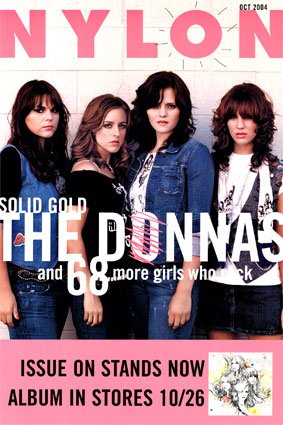
    Entering the backstage trailer where The Donnas sat relaxing, I noticed a copy of next month's Nylon magazine out on the counter—and who was on the cover? The Donnas. I casually asked what they thought of it, and with a tone of subdued enthusiasm, they answered. The four of them – drummer Torry Castellano (Donna C), bassist Maya Ford (Donna F), guitarist Allison Robertson (Donna R), and singer Brett Anderson (Donna A) – all agree that media coverage is good, even essential. But reading or hearing about what others' think of you, good or bad, can be weird. Even if a writer does nothing but dote over them, they can still get it wrong. "Sometimes we're not into the style of the writer, sometimes we say things that later we regret, or we'll see it and even though it came out of our mouths and sounded good at the time, it looks stupid on paper," said Maya, who complains that she always gets labeled as the quiet one. Note to self: Maya is not quiet. Actually, nothing is quiet about The Donnas. And with their sixth album "Gold Medal," due out next month, it's only getting louder.

    [Ed. Note: Yet another article I came across and thought to post. A good read for any fan of The Donnas. One of the funnest interviews I've ever done. Such cool girls.]


    Many of the females that I have spoken to about The Donnas all respect the fact that you all play your own instruments. Why do you think that's one of the things that always come up?

    Allison: [Smiles] I know -- Imagine how funny it would be if someone was like, 'I love Sum 41 – and did you know they, like, play their own instruments? [Laughter all around.]

    I sense you're being sarcastic.

    Allison: No, seriously, we like that question, especially coming from girls because we want people to know things about how we learned to play. I mean—we didn't take lessons. When we started we didn't have money for it. Our parents were supportive enough to help a little, but my parents couldn't afford to buy me a big amplifier and a nice new guitar. We all started with crappy or rented equipment, like Torry. She had a rented drum set. Brett borrowed her brother's guitar amp that was only three inches wide – you know, practically impossible to sing with.

    Maya: And that was for like the first five years we were a band.

    Allison: You should have seen the practice stands Maya and I both had; they were tiny, little pieces of junk.

    Maya: My bass guitar cost only a hundred dollars.

    Allison: Yeah, my guitar cost like a hundred-fifty or something. We had no choice but to play crappy equipment.

    Brett: We even tried to sound proof the house garage ourselves. It was funny -- our moms' would buy the foam.

    Allison: A lot of it was just homemade and just for fun. I think if you start out trying to be stars, and try to do everything all 'big' right away, it becomes a problem with a lot of bands. We didn't have big egos, because we didn't even know if we could play. We just thought, 'hey, this is a fun idea, let's roll with this.'

    And that was back when you were the Electrocutes?

    Allison: Actually before that we were called "Screen" and then "Ragady Anne." We've had a lot of names.

    Torry: A lot of people, especially girls, come to us after we play and they're like, 'I really want to be in a band but I don't know how to play an instrument.' But we've sort of proven that you can just get your friends together, without knowing how to play like experts. We just went out and practiced so much – but always just had fun with it. That's all it takes to be able to be in a band.

    Allison: And besides, everyone has to learn. There are a couple of prodigies out there that are the exception, but everyone else has to learn.

    Torry: Exactly. We're still learning and practicing. We don't ever have the attitude like, 'Wow, we're awesome! We've made it! I know everything about the drums, I don't have to learn anymore...'

    Allison: Right – we're always trying to get better.

    Maya: I want to learn Abba songs.

    Allison: Abba has got some killer bass lines [Everyone Laughing.]

    Donna A plays the guitar better than you. Kind of turns you on, doesn't it?

    So how did you come up with the name of the band?

    Allison: It was kind of a fluke, actually. Our friends found this logo on a McDonald's Happy Meal that had really cool lettering. The design was cool, but, of course, it spelled out McDonalds. So our friends were trying to piece the letters together to spell something else out, and they came up with a couple different names. The Donnas was one of them, and we thought it was cool. We didn't really think it would last that long – the name or the band. We weren't really sure how we felt about the matching names. We thought it was funny though, because we're from the Bay Area and before The Hives and bands like that, there were all those bands that dressed up in matching suits, or they would all have the same name, or the same last name. It was an inside joke to us.

    So The Donnas was a parody of those bands.

    Torry: Exactly, and anyway, The Donnas then was our side project to The Electrocutes.

    Brett: And in our "real" band, we used our "real" names and our "real" good ideas.

    Allison: The Donnas was our joke and then one day it just sort of took over. We started changing the sound gradually until it became more of a band we could be proud of. At first we didn't even want our name on it, you know, that's why we didn't use them. But then people started coming to the shows.

    Speaking of shows, The Donnas are about to kick off a tour with the Von Bondies and Starlight Desperation, right?

    Torry: Yeah, we're really excited.

    Allison: Maya met one of them.

    Maya: I what?

    Allison: We met the singer of the Von Bondies.

    Jason Von Bondie?

    Brett: Yeah, that's the guy.

    Allison: You met him Maya, remember?

    Maya: No ... I don't remember [Everyone is laughing, talking over each other].

    What was the deal with him and Jack White? I heard they got in a fight.

    Brett: Yeah, I heard he lost [Jason Von Bondie].

    Maya: Beat him up pretty bad, too.

    Allison: I think the question is what's up with Jack White.

    Brett: [Changing the subject.] Whatever. All I know is we saw the Von Bondies at The Great American Music Hall [in San Francisco].

    Torry: And they were awesome.

    Brett: When we met them afterwards, they were nice people, and getting along is so important to us. We hate touring with bands that at first you think are cool or trendy or fun, but when you hook up with them, when you meet them, they end up being total dicks.

    Torry: And it's nice to hang out after shows or traveling. I mean –hanging out with cool people is part of the fun of touring.

    Allison: And the Von Bondies have a cool sound – it's bluesy and you can really get into it. That's the kind of stuff we can listen to every night. I can imagine people getting excited for our show listening to Von Bondies music.

    Maya: It sucks going on tour with a band that plays music you don't like.

    Allison: Yeah, like some times you get put on a music tour ticket where you don't have much choice in the band you'll tour with. Technically, you can make a big stink out of it and say 'I don't want to tour with them,' but a lot of times it comes down to people telling you that 'If you tour with this band, you're going to get a lot more support from the label...' You know what I mean? You get put in these positions where it's not a threat, but it sort of comes down to the fact that maybe it will be better for ticket sales or whatever. So you listen to them, you go on tour, and then you're right and it doesn't work out.

    Maya: And it's important to be with bands with good music because I like to watch the opening bands and get pumped before I go on stage to play. It's gets you in the mood, and you're like 'Alright, let's do this, let's get on that stage and rock the show.'

    Allison: But it's hard to know because sometimes people put together a bill and you're thinking to yourself that you would never like that band – but then you make friends with them. Sometimes it's just like 'Wow, I never thought I would like them or listen to them.' But they end up being really cool, and their music ends up being good, so I guess my point is that you can't always judge things before you start. You have to just take a chance.

    If you were Donna B's boyfriend and you cheated on her, this is the wrath you'd face.

    So how do you all feel about being here at the Gravity Games in Cleveland?

    Brett: So far it's pretty stormy.

    Allison: We have no idea because right when we arrived, they closed everything because of this crazy weather.

    Torry: We're not even allowed to be on the stage right now because it's so windy.

    Allison: We're stuck inside this motor home in the middle of a tornado [They all laugh, obviously still having a good time].

    So what do you think of the all the sports? Are you familiar with any of them?

    Allison: The bikes are cool.

    Brett: I think it's all really cool, but because we're from San Francisco, we've been around a lot of this lifestyle our whole lives.

    The skate scene is good in San Francisco.

    Brett: It's cool because some skaters can be really nice. But then a lot of them, when I run into them around the city, can act like total chauvinists, and their behavior just totally turns me off of the scene. Maybe it's just my own experience, I don't know. I had this boyfriend that worked at Deluxe [Skate shop in SF] for a long time, and every Saturday he would go over to this guy Jim's house because he had a skate ramp. I was never invited. Five years and I was never invited! I couldn't even go and watch – even if I wanted to, unless maybe ... I was naked. And that's still a maybe. It was like every Saturday was only for guys. Why have a boyfriend if you aren't even included in his life. I feel like so many girls that go out with skaters, or whatever – football players, anyone – get into a situation where it becomes all about the guy and what is going on in his life. Relationships need to be equal.

    With those words of advice, I think we'll call it a wrap.

    Torry: Oh, really? We were just getting warmed up.

    Allison: Did you even get to ask any questions?

    Torry: [Laughing] Sorry. Once we get talking, it can be hard to stop us.

    No it was perfect. It was totally fun hanging out.

    Tuesday, August 01, 2006

    Michael Moore: The Big Fat King of Satire

    Ed. Note: This is a paper I wrote at Berkeley under the direction of Mr. Jonathan Gray, who now lectures at Fordham University. Not only is he the man, he's also an important thinker on media, cultural studies, parody and satire, and intertextuality. You can buy and read reviews of his recent book, Watching with The Simpsons: Television, parody, and intertextuality by clicking
  • here


  • Also, the endnotes are not included. Sorry. But check out the bibliography. If you're a college student submitting this paper as your own, you're stupid for plagiarising. After graduation, when you get a real job, you'll realize how unfortunate it is that you can't formulate or research your own ideas--let alone express or argue them on paper. Sucka!


    David Worcester in The Art of Satire labels satire as "the Proteus of literature" and points out that "the spectrum-analysis of satire runs from the red of invective at one end to the violet of the most delicate irony at the other" (Lee, 4). Wherever it bounces along this vast enigmatic spectrum, satire, it can be said, boils down to comedy that has something to say about the society in which it exists. Rather than a comedic bang of inanity , or comedy for the sake of comedy, satire carries intent. It has a social mission. As a form of comedy, it aims to elicit laughter, but unlike other forms, satire incorporates a denunciatory message, deriding those or that which it targets. Laughter and humor are the vehicles by which the message is delivered, and if these vehicles do not provoke an element of anger or moral disgust, you are responding to comedy, not satire (Nelson, 24).

    Michael Moore and his show, The Awful Truth, embody the satiric, and in this essay, I will argue Moore's important function, by his use of satire, in the forward progression of important social issues. First, I offer a description of the sketch I will be working with throughout the paper, to develop a working premise; next, I examine the form of comedy that is used in the featured sketch to foster satire; this established, I explore semiotics: how meanings are initially formed, and how satire works to open these meanings, while emphasizing the value of this process; finally, the essay finds itself calling for the inclusion of satirical comedy into Habermas' model of the public sphere, as a 'fifth estate.'

    To show how satire can and indeed does play an important role in pushing forwarding important social issues, I have selected a sketch where Michael Moore addresses the ongoing allegation that cab drivers in New York City use racial discrimination when deciding whether to stop and pick someone up, which feeds into the broader social issue of racial profiling.

    The TV style vignette opens with Michael Moore behind the wheel of a Yellow Cab; soft jazz and gray skies conjure up an aura reminiscent of Taxi Driver. As Moore rounds a Manhattan block, his first prospective customer is spotted. The music instantly turns ominous, and danger is sensed. The camera pans to the woman flagging the cab, the music crescendos, and the control panel to the doors' power locks are frantically located: she is...white! The stage is now set, and the use of satirical bigotry has been established, only, reversed. The idea being that, if cabbies are going to refuse to pick up black people, Moore, as a cab driver, is retaliating by refusing to pick up white people. Moore seems to have deconstructed the paradigmatic composition, only to put it back together, but—uh oh!—he reappropriated the wrong color to its respective semiotic meaning. Black is now a symbol of safety; white, a color to be feared. "Do you have enough money?" he asks of a wealthy man, wanting to go to Madison Avenue, before speeding away.

    Interspersed throughout the remainder of the episode, Moore continues to casually and happily refuse service to white people, usually with a snide comment (Are you white? You look white.), or a gesture indicating fear (on his part, not the person trying to get the cab; theirs is bewilderment), all the while picking up black people and offering them discounts on their fare.

    Inspiration for this piece came about when an incident was reported by Danny Glover, claiming that he was unable to flag down a cab because of his color . Glover, with his celebrity status, created such a stir that Mayor Giuliani spoke out publicly, calling for action by the NY Taxi and Limousine Commission (Bumiller, NYT, 1999).

    The Awful Truth, rather than offer an answer to cab discrimination, attempts in its skit to level the playing a field a bit. Moore, as always, is trying to make a statement, and it is through comedic satire that he is able to get his point across. By refusing the patronage of white people, an incongruous situation occurs. The ridiculous (and unbelievable) notion that a cab driver is denying a well dressed, ready-to-pay customer moves toward Jerry Palmer's 'theory of the absurd,' the idea that when two lines of logic meet head-to-head, if properly 'prepared,' they will 'culminate,' and an absurdity will result (Neale and Krutnik, 68). Yellow cabs are a staple of New York City streets; this is completely normal, logical; obviously, cab work is supported by people needing transportation, so when a person (whatever their color of skin) is refused, it may seem to the viewer as quite absurd. Further, the refusal of service defies any usual or expected rationalization, when the one doing the denying, is a white man. This setup negates the idea of rejection based on class camaraderie and loyalty, and further complicates the semiotics of sense making. The effect becomes an illogical incongruity, and many viewers, not accustomed to seeing such behavior, are likely to laugh. But for Michael Moore, laughing comes secondary. The most important thing is that his social message gets out—to raise awareness of discrimination that persists in our society—but how it gets out is precisely by the use of this comedic technique. Comedy is the vehicle in which satire travels.

    As suggested above, the manipulation of semiotics helps to create this environment of absurdity. Semiotics is a theoretical concept that seeks to connect symbols and signs, both artificial and natural, and assess how these signs and symbols are compiled and connected by the human mind to construct logic and meaning . The media, by choosing to cover Danny Glover's story of discrimination, helped to shed light on a problem affecting users of taxis in New York. The construction of the story, however, was constructed within the confines of a media code, an unwritten law of norms that make up the media's dominant ideology; a denotative framework for how 'serious' news should be reported. Media codes, for the most part, must be followed in order to 'gain entry' (Bourdieu, 65). Sound bites of Glover, Giliuani, and other individuals are used to shape one side of the story; additionally, taxi drivers are found that will give an opposing view, thus creating a sense of objectivity, or 'democratic equilibrium' (Bourdieu, 34). One side calls for a big crackdown on cab drivers suspected of profiling, introducing a group of undercover officers to pose as would-be passengers, etc. Rebutting, the taxi drivers pose a defensive of why they might feel picking up a white person is safer than picking up a black. In one Times piece, an Asian cab reports how twice blacks have robbed him, and that he has never had a problem with a white person (Bumiller, NYT). The problem then becomes a matter of framing; only so much information can fit into a short story about Danny Glover and his encounter with a suspicious cab driver. As Pierre Bourdieu explains, "[E]vents are reduced to the level of the absurd because we see only those elements that can be shown on television at a given moment, cut off from their antecedents and consequences" (6-7). The point here is not to determine whether this particular coverage was good, bad, right, or wrong. It was probably a bit of each. What I am trying to show are the inherent limitations of structural controlling systems that are imposed on ‘serious’ news media. So, although it is a major source of cultural production, the fact that it is limited necessitates a place for satire in furthering and adding to semiotic construction. As the 'serious' source of information, news media delivers the 'real,' which then defines or refines the status quo. Satire takes this accepted construction—the ideological, cultural, and aesthetic elements—to form its own irrational, thru rational verisimilitude. The better this is done, the greater the satirical impact, and the more significant the social message becomes to the viewer.

    Mayor Giliuani, by calling for black 'under covers,' played a role in syntagmatics—he added to the connotative semiotics, which suggests blacks are dangerous, precisely by using them as his tool to fight what he had just denounced. The taxi skit highlights this contradiction by doing what 'serious' news media is unable to do: turn it into a joke. As a satire, we are able to see the issue in a new angle, not framed within 'serious' news. By reversing the semiotics of color, it opens up social commentary, showing how the fight against racism was never won; it has merely found new ways of working, and embarked upon a new image. No longer do we see signs of segregation blatantly instructing people of color where they can or cannot drink or sit. Nowadays, racism has become much more subtle, and this insight is borne by way of this satirical skit. Whereas Giliuani's message resonates as something sounding like a 'pseudo-solution,' satire forces us to consider the roots of racism in this country more critically. The fact-based objectivity of serious news is too politically correct, "too polite," as Douglas Sun might say, to get to the heart of the problem (In Sloane, 18). Satire fills this void.

    Six years earlier in 1993, Moore had conducted a similar experiment with cab drivers on his preceding show, TV Nation. Here, a respected theatre actor was hired to stand on the street and hail down cabs. Decently dressed and flowers in his hand, he seemed a safe candidate for pickup—except he was black. Down 30 yards or so past the actor was a man who had just been released from prison, having served time for murder. The felon's appearance was not worse, but certainly not better, than the black actor. He may not have been holding a fresh bouquet of flowers, but he was white. As expected, the cab passed the black man and stopped at the white man. "Satire is affirmation through negation," says Gregg Camfield (In Sloane, 29). In this sense, by failing to stop for the black guy, the existence of racial discrimination is affirmed. This type of setup is classic Moore, where he takes and warps the semiotics. Rather than just have a regular black guy and a regular white guy, he drives home his message by attaching much more complicated meaning (known only to the viewer). Proving that a murderer can get a cab before a well-respected actor comes as an attack against the stereotypes and stigmas that are widespread in our society.

    The Awful Truth is truly a declaration of 'semiotic warfare' on everything. The taxi sketch is but one example of the type of satire that has made Moore famous, infamous, loved, and hated.

    Overall, and in general, I believe the work of satirists like Michael Moore contribute greatly to the discourse of social issues. Pierre Bourdieu, in his book On Television, builds a theoretical framework in which news, journalism, politics, and television can be critically deconstructed and better understood. A marked flaw, in my opinion, is that he is too quick to discount the political discourse that is diffused in entertainment, and human interest-oriented programming. A whole book that is dedicated to political framing and the information dissemination landscape of television warrants discussion of viewers who, actively or not, find various forms socio-political education via alternative sources, satirical humor being one example. Bourdieu labels news anchors, talk show hosts, and sports announcers as "two-bit spiritual guides of morality" (46). But, again, this fails to address the viewers who are not interested in this type of programming, and would rather use satirists like Michael Moore as their own "two-bit guides." In fact, satirists have more power and freedom; they have an opinion, whereas news anchors can be highly ambivalent in their reporting, and thus fail to promote discussion. Mainstream news might even unwittingly contribute to passivity, by only using political elements that will "engage everybody" and "offer something for everyone," thus actually creating a sense of disenchantment by being too broad (18).

    Finally, considering the direction of this essay, it seems reasonable to posit that satire seems to be emerging, within what Jurgen Habermas' model might term as a 'fifth estate' of comedy of the public sphere. Satire in the postmodern seems to be gaining a stronghold, as an appropriate place of political discourse, trailing close behind the established 'serious' 'fourth estate' of the press. As Stephen Wagg puts it, "Comedians on the whole, are natural populists: it is their job to judge what people already think and to address them accordingly" (270). Perhaps people are able to easier respond to and identify with comedy, in contrast to the increasing amount of rhetoric inherent in serious discourse. In a study of The Simpsons and how a group of university students watch and use the show, Jonathon Gray concludes that indeed,

    [D]iscourse that surrounds The Simpsons is clearly capable of being exported into discussions with many different and assorted individuals and groups, and in some way fosters a public sphere in which politics, [and] the mass media...can be held up to examination (Gray, 13) .

    Michael Moore is by no means as influential or socially pervasive as The Simpsons; this is not what I am suggesting. What I am suggesting, albeit on a smaller scale, is that Moore, by using satire and sometimes parody, in many similar ways that The Simpsons do, is helping to contribute to a sort of public sphere through comedy, and by doing so, pushing forward and contributing to important social issues. His work is controversial, as satire should be, leaving no shortage for debate and healthy argument. For each book that targets the right, there seems to be a book released targeting the left. Most of these books, one will find, are heavily laden in satire. As Moore prepares to release his new move, Fahrenheit 911, another group prepares for the release of Michael Moore Hates America. Both movies are based on comedy, and both aim to disseminate a political message, through satire!

    "One of the things we really enjoy doing on this show is not just doing a TV show, but actually trying to, you know, encourage people to take action, or effect change in some way; get people to, you know, get off the couch and do something. Television is such a passive activity, and we're not passive people ourselves, and through our sense of humor we're trying to talk about some of these issues that effect the country and the world, in the hopes that people watching might feel inclined to do something about them."

    - Michael Moore, commenting on the second season of The Awful Truth, in which the taxi skit appears.


    References


    Bourdieu, P. (1998). On Television . New York: New Press.
    Bumiller, E. (1999). "Cabbies Who Bypass Blacks Will Lose Cars, Giuliani Says," The
    New York Times, November 11.
    Camfield, G. (1998) "How MTV 'Re-Butts' the Satiric Argument of Beavis and Butt-
    head." In D.E.E. Sloane (Ed.), New Directions in American Humor (pp. 11-25). University of Alabama Press, Tuscaloosa.
    Casey, B., Casey, N., Calvert, B., French, L., Lewis, J. (2002). Television Studies The
    Key Concepts. New York: Routledge.
    Chen, David W. (1999). "Many Riders See Nuances in Bias by Cabbies," The New York
    Times, November 12.
    Lee, J.N. (1971). Swift and Scatological Satire. Albuquerque: University of New Mexico
    Press.
    Neale, S. and Krutnik, F. (1990). Popular Film and Television Comedy. New York:
    Routledge.
    Nelson, T.G.A. (1990). Comedy: An Introduction to Comedy in Literature, Drama, and
    Cinema. New York: Oxford University Press.
    Sun, D. (1998). "'Change It! This Sucks!': Beavis and Butt-head, Idiot Savants of Cultural
    Criticism." In D.E.E. Sloane (Ed.), New Directions in American Humor (pp. 11-25). University of Alabama Press, Tuscaloosa.
    Wagg, S. (1998) "'They Already Got a Comedian for Governor.' In Wagg, S. (ed.),
    Because I tell a Joke or Two! Comedy, Politics, and Social Difference. New York: Routledge.
    Getting a Post (of any kind) Picked Up

    Posting is cool. Getting posted on is even cooler.

    Only one person has commented on my site. A woman, from Texas, a sweet hispanic. Somebody you'd expect to be from Texas, probably has good values, all that. It's written in part Spanish and part English. Daily on-goings, her family. The everyday.

    Cool, thanks. Really. The others have been spam, which isn't cool.

    And it's not like I expect comments. It's not updated regularly. Much of the content has been recycled, and the content that is original to this blog are usually half-assed, half-edited garble. Like this one, in a way.

    Nor do I promote myself in anyway.

    But I do regularly think about updating--well, in spurts; most people, like myself I assume, get busy. Work, personal life, the beach, exercise. I try to pretend I have a life beyond this computer.

    Saturday, July 29, 2006

    Film Series Focuses on the Reality of the Latin World

    Ed. Note: This is an article that I wrote back in 2002. The original can be viewed
  • here.
  • Woman in a Maquiladora (foreign-owned assembly plant) on the Mexico-U.S. border in Maquila: A Tale of Two Mexicos.

    Latino/Hispanic Heritage Month, celebrated nationally from September 15 through October 15, recognizes the rich cultural influence of the quickly growing minority.

    Congress created the observance more than 20 years ago, originally as a weeklong event. But, by 1989 the event had become so well regarded and ethnically important that the government expanded it into a month long celebration.

    As part of the awareness-raising efforts, City College hosts a film series titled Understanding Latino Culture.
    Documentary filmmaker and adjunct professor of Latin American Studies, Greg Landau, contributed two videos to the series. Landau, 47, is a soft-spoken, ostensibly modest man despite his overflowing list of accomplishments. A two-time Grammy nominee, Landau also serves on the Board of Governors for the Grammy organization. He has produced more than 30 CDs and film soundtracks, and worked on numerous documentaries and videos.

    Maquila: A Tale of Two Mexicos musically scored by Landau and produced by his father, Saul, takes a sobering look at the manufacturing industry in the northern border cities of Mexico such as Juarez and Tijuana. The film illustrates the harsh reality of the transitional effects of industrial globalization on both rural and urban communities.

    Maquila examines and draws conclusions about the ethical conduct of multinational corporations that set up shop in Mexico seeking cheap labor. An unnerving contrast of perspective depicts English-speaking maquila managers defending (or denying) their actions while conversely, English subtitles translate desperate factory workers telling stories of inhumane treatment.

    Maquiladoras soon developed as a result of the North American Free Trade Agreement of 1994, between the United States, Canada, and Mexico. Maquilas were intended to boost the Mexican economy. But, low wages, lack of union organization, and the abolition of the Mexican Constitution's Article 27 which protects the communal use of land, created a setback rather than a progressive, in-works solution. The free trade treaty brought competition for land. Consequently, farmers had to make way for the construction of the factories. As a result, rural agricultural systems are ever disintegrating, forcing farmers and peasants off their indigenous lands and into the urban workforce.

    In addition to the failing economical construct of maquilas, Mexican sociologists discuss their pollution's human toll and the lack of environmental regulation. One sociologist interviewed tells the story of a peasant girl burnt by acid when she accidentally falls into a river swelling with toxic sludge. Camera shots of once green trees are shown wilting gray with fiberglass residue. Elderly folks discuss the unexplained skin blotches that ornament their skin while farmers wonder why their chickens are dying.

    Women face additional safety issues in these border towns. Leaving maquilas after work in Juarez, women face unprecedented risk of rape and murder. Today hundreds of cases remain unsolved, and families wait in vain for justice to be served.

    Viewing the film takes a strong stomach, but it is well worth the discomfort. Exposure to the reality of such activity, to see firsthand the issues Mexico faces, to better understand globalization and the rising world market, makes this video absolutely essential.

    Landau produced the second video, Five Days in March, directed by revered Oscar winning filmmaker, Haskell Wexler. "I can't say enough good things about these two radical documentarians," says The Indigo Girls' Amy Ray in her online travel diary. "[Greg's] work is very important...Haskell is an older gentlemen who came up through the activism of labor politics, opposing McCarthyism, civil rights, etc."

    The two filmmakers were invited to be the official documenters of a song-writing workshop and cultural exchange program fittingly titled Music Bridges, between famous Cuban and US musicians in Havana in March, 1999. U.S. artists included Montell Jordan, Mick Fleetwood, the Indigo Girls, Bonnie Rait, Gladys Knight, and Joan Osbourne, among many others.

    "What the organizers were looking for was a kind of MTV documentary, but what we saw and felt in Cuba at that particular time, it didn't seem very appropriate," says Landau. "With the transitional time in Cuban history we felt compelled to document more of the Cuban musical culture, rather than follow all the rock stars around."

    Five Days is full of spontaneous "freestyle" sessions, as camera crews follow artists through various city scenes, stumbling upon musical talent amid the labyrinth of streets. The film touches upon elements of Cuban culture such as the influence of Che Guevara, baseball, and the Afro-Cuban Santeria religion. Far from apolitical, this film is a positive, poignant tribute to the people of Cuba, and the unique lives they lead under the dictate of Fidel Castro.

    Landau will lead a group of students and faculty to Cuba for a two-week study abroad anthropology class. Open to all, with an overall cost estimated at $2,500, the class will explore colonial cities and museums, and talk with Cuban intellectuals, writers, poets, and anthropologists. It will cover the development of Cuban culture, the African-Spanish influence, folkloric history, and other relevant Cuban issues.

    The Walkmen: The New York Hipsters With Attitude are Pushing Old Styles Of Rock In New Directions


    The Walkmen are revitalizing rock. While most of us still try to grasp the difference between Indy and E-mo rock, the stylized sound of the Walkmen have prompted music critics to be as referential in their descriptions of the band as the musically omniscient record store employees of the cult film High Fidelity ever were.

    “There has been a lot of confusion as to the influences of your music,” I said to the band and then read this quote: “[Your] music is artful, intense, melodic rock played with passion and superb musicianship.” In response Walkmen organist Walter Martin said, “Sounds good,” but then cast me the “whatever” gaze. Then I told them I was kidding and that the quote came from a description of Journey in 1979 – the same year in which the first “personal cassette stereo player,” or “Walkman” hit the market. “And this means … what?” questioned drummer Matt Barrick. I was just about to get to the final part of my theory (in which bands Journey and Joy Division got drunk, had a baby and named it the “Walkmen”) when Matt cut me off. “Bottom line,” he said, “We don’t discuss our sound.”

    The tragically hip New Yorkers – Hamilton Leithauser (vocals), Walter Martin (vocals, organ), Paul Maroon (guitars), Matt Barrick (drums), and Peter Bauer (bass) – don’t have to discuss anything with anyone if they don’t feel like it, as they currently enjoy a vanguard position in independent rock. Girls love them. Hipsters love them. Gay hipsters that dress up like girls love them. They are elitists and, as such, rather full of themselves. But they are gifted artists, and damn good at what they do, which is to produce music. Their punchy yet darkly melodramatic sound is perfect for the forlorn teenager but complex enough for the music aficionado to appreciate.

    Band members Matt Barrick and Walter Martin kindly, but coolly, visited with Gravity Games backstage after their show. Here’s what went down.

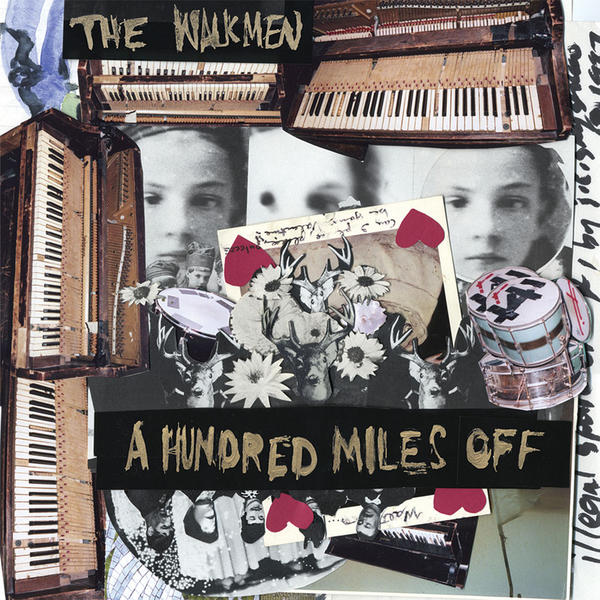
    Ed. note: This is a republished article I wrote back in 2005. The Walkmen have since released a new album, "A Hundred Miles Off." You can read a review of the new album
  • here.


  • So you guys all grew up in Washington D.C., is that right?

    Matt Barrick: Yeah, but now we all live in New York. I live in Brooklyn with Pete [Bauer], and Walter [Martin] lives with the others guys uptown.

    Walter Martin: The Upper West Side, like…way, way Upper West.

    How did the Walkmen come together?

    Walter: Me and Matt and Paul had a band called Jonathan Fire Eater with two other guys, but then we broke up. Ham [Hamilton Leithauser], the singer of Walkmen, who is my first cousin – he was in a group with Pete [The Recoys], who is our current bass player. Their group broke up at about the same time. So we joined forces.

    What year did this all go down?

    Walter: This was around 2000.

    [Matt gets a phone call.]

    Matt: Hello? No. I have no idea. [To Walter] Hey, Walt, do you know who has the keys to our van?

    Walter: I do. I have them.

    [They try to figure out how to get the keys to Paul and Peter, who have been selling t-shirts down at the show.]

    Matt: Sorry about that.

    No Problem. Let’s continue with the band’s history. What age did you guys start to play instruments?

    Walter: Matt and Paul and I have been playing together since we were little, like seventh grade or something. We all had band class together. About this time I started playing the organ.

    Did you always play the organ?

    Walter: No. I played the guitar for a couple of years and then I just shifted to the organ and didn’t go back.


    Walter Martin delivering that signature Walkmen sound

    What about you, Matt?

    Matt: I played the guitar one show in seventh grade and then we decided our band needed a drummer so I quit guitar and started playing drums. My aunt bought me a drum set.

    Matt may be the shortest member, but his sound is the loudest.

    Did neighbors ever complain about you playing the drums?

    Matt: I grew up in the suburbs, so it was cool. Nobody could hear me. I could drum all day.

    Outside of playing music all day, you guys were into basketball too, right?

    Walter: Yeah, yeah. We now sponsor a peewee team in D.C. at the boy’s club where we all used to play basketball.

    [Knock on the door. Some big muscle guy enters.]

    The Muscle (guy): Hey guys, how’s it going?

    Walter: Great. We’re actually in the middle of an interview right now.

    The Muscle: Just wanted to say, uh … [Suddenly turns and walks away.]

    Walter: [Shrugging at The Muscle, laughing.] Anyway, our basketball team – they’re called the Walkmen. They’re cool. We bought them all-black uniforms.

    Matt: I kind of feel bad for them, actually.

    Walter: Why?

    Matt: Because they are always playing against the “dogs” or the “tigers,” the “hawks,” “bears” – big, tough names. And then they are the “Walkmen.” Kind of a sissy basketball name is all.

    Walter: But they are pretty good. They are like 3-3, I think. Names mean nothing in peewee basketball. It is all about skill with the eight year olds.

    [The Muscle returns, this time he looks hostile.]

    The Muscle: Excuse me? [Addressing me] Can you let these guys eat? [Matt and Walter have been eating food during the interview].

    Walter [To The Muscle]: No, no. Take it easy man. It’s fine.

    The Muscle: OK, I just wanted to make sure you guys weren’t being bothered.

    Walter: No, no. I invited him up [pointing at me]. Everything is cool. Don’t worry.

    The Muscle: Great then! I just wanted to thank you guys for coming out. You guys rule! [Unconsciously beating his chest not unlike an excited ape.]

    Walter and Matt [To The Muscle]: Thanks. Thanks.

    The Muscle: Oh, yeah. Almost forgot. Do you guys have the keys to your van? Everyone is waiting to load up the stuff.

    [The Muscle gets the keys from Walter, thanks them again, apologizes for the interruption, leaves.]

    Walter: That guy was ready to pounce.

    He would have loved to wrestle me right then.

    Matt: We should have turned on you. That could have been funny.

    Well, thanks for the protection. Let’s get back to the Walkmen basketball team. No offense, but do you seriously think 3-3 is good?

    Walter: Good point. They were doing good early on in the season is what I meant. They won their first three and then lost their last three. They’ve had some tough losses.

    Does the team listen to your music before they play a game?

    Matt: Yeah. We force them to memorize all the lyrics to our songs. [Laughing.]

    That’s great, molding them young. So what else have you guys been up to?

    Matt: We have been touring for about a year now.

    Walter: And we’re starting to write our third album. But we’ve been really busy on the road, so we still have a ways to go before it will be finished.

    What do you guys do during travels? Do you read, write love letters, what?

    Matt: I like to read love letters.

    That’s clever.

    Walter: I just finished reading the Ulysses S. Grant autobiography.

    Did you learn anything?

    Walter: Yeah, his mug got put on the $50 bill.

    Matt: We watch a lot of movies, too. We just watched the Aviator. That movie sucked.

    Walter: That movie was a piece of shit.

    What else are you guys doing? Do you party in New York a lot?

    Walter: Not really. I sit around in my house and get depressed --

    Matt [Finishing Walter’s sentence]: Because all our money is flowing out of our bank account living in New York.

    What is the best show you guys have ever played?

    Matt: I think the consensus is Brazil, isn’t it?

    Walter: We played at this festival where we were the only non-Brazilian band, so I think people thought we were, like, Aerosmith or something. They loved us.

    [At this point, The Muscle returns. I get nervous.]

    Looks like your friend is back.

    Matt: I thought he was your friend [Laughing].

    Anyway, I should probably wrap things up.

    Matt: You sure you’re not just scared of the bouncer?

    Maybe a little. Any last words you guys want to share with our readers?

    Walter: Yes. Thanks to everyone for all the support.

    Matt: Thanks to everyone. We’ll be putting out some more stuff in the near future. Thanks so much.

    Sunday, May 28, 2006

    Now Parents, Brad Pitt And Angelina Jolie Both Still Way Doable

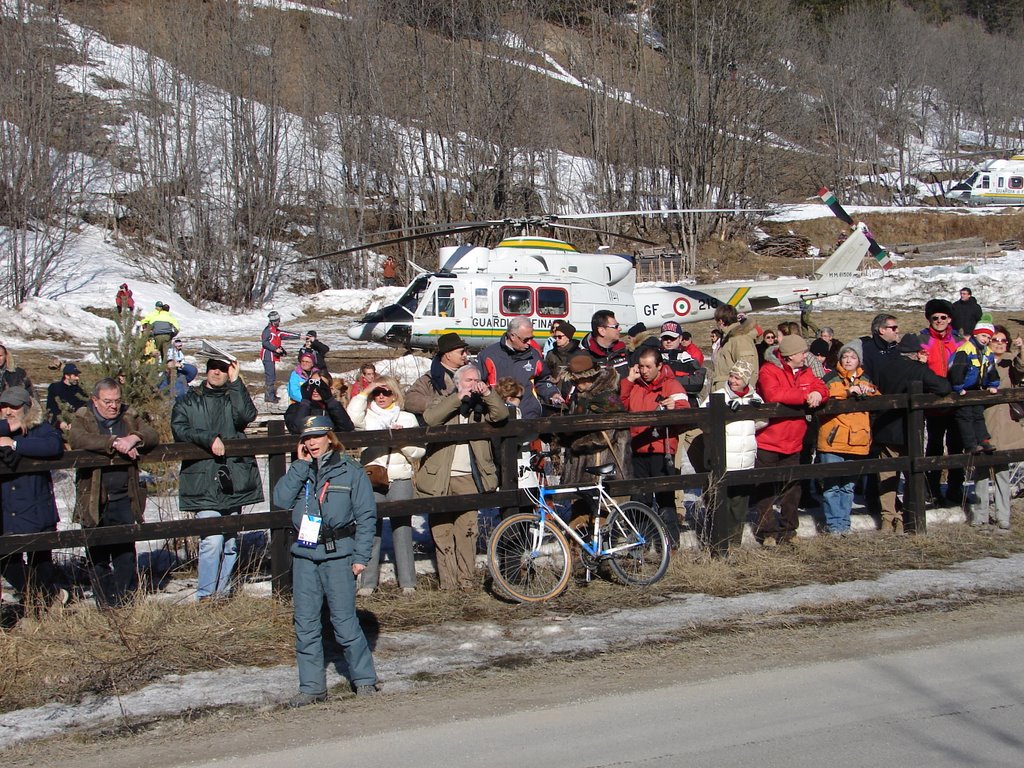
    Breaking News! Hordes of fans gather across the street from a house in the Northern Alps of Itally, where Brad Pitt and Angelina Jolie were spotted on the deck eating what appeared to be crepes. "At least, that's what this guy was saying," said one bystander. "And then it just kind of spread like wildfire." The bystander decided to see if he could get a peek because, although Pitt and Jolie "are parents and all that, they are both still way doable." Another bystander questioned said he wanted to see if the camera contributed to the size of Jolie's breasts, while his girlfriend wanted to determine if Pitt's face was as porous as the editors of People Magazine have claimed.

    Midwest Bumpkin Visits California Only To Find Herself Naked


    Whoa...where did she come from? A friend--and other friends, take note--e-mailed me the, um, titillating shot. Basically, the story is that this chick was visiting from some town in the Midwest, met a photographer (a friend of my friend who, as a friend, passed it along to me), and he, being a sly dog, persuaded her to pose for some model shots.

    What do you think? Does she have a chance?

    Saturday, May 27, 2006

    My First Photo, Testing 1,2,3.

    Step off, snowboarding bitches. Claiming? Heyo!

    Thursday, May 25, 2006

    I'm not a blog apologist, just for the record.

    But I just had to let myself know (since I'm the only who has ever read this thing), that the Mitch Allan interview I posted, like, a couple years ago -- um, yeah, I don't know why I did that. Did you hear that self? I said I don't know.

    The thing is, the music of SR-71 or Mitch Allan is a type of rock that I am not particularly fond of. When I interviewed him he was a pleasant enough fellow, and a handsome devil to be sure. He even was dating some hot Charlie's Angels chick (the asian one, you know, the hottest one) at the time.

    And boy did he know how to work the camera! Blue Steel, Magnum, he knew all the poses.

    Limewire: A Love-Hate, But Mostly Love, Pastime.


    I'll admit it: I use Limewire. Wait, don't I care about musicians getting what they deserve, profit and money?

    The answer is yes, I would like that very much.

    Here's the catch: I don't have any money. What little money I do have, it goes to bills like the internet and rent and gas -- these days especially gas. So when it comes to buying music -- oh, I can't download clothes or limited edition sneaks, either -- it's, well, low on the totem pole. Yeah, yeah, yeah, the whole music revolution, the industry is a changing, right, I've heard it (I've also download the yeah yeah yeahs just to be clear). But do I have to be the one to help change it? I mean, there's poor people in third world countries being exploited by capitalist money mongers, there's civil unrest in Darfur, there's scams-a-many in Nigeria, and who gives two shits about those palestinians...right? Right?

    I know, I know, it's the little things that make a difference. Like recycling. My girlfriend is always getting bent out of shape when I get lazy and throw a can or plastic bottle into the regular trash instead of the recycables bin. Yet I'm not too lazy to download free music. Hmm. Something about my integrity isn't adding up. I might just have a case of the indifferences. Very serious, I hear, and it can lead to apathy and personal selfishness, even deadlier societal diseases.

    But until then, it's off to Limewire! And just so I don't feel too bad about it, I'll try to remember to throw my soda in the correct receptacle. Ah ha! One right makes you forgot about one wrong ...

    Thursday, March 02, 2006

    Rare 60s Poster Art Rocks Visual Arts Gallery

    I'm on a roll here: three posts in one day. Of course, all I'm doing is repurposing archived articles I have just stumbled across on the web, which I wrote years ago. So really I'm just preserving or, archiving, for myself. (2008 update: Jesus. I almost gagged on this preface. "I'm just preserving or, archiving, for myself." Man, so gay. But I guess I'll "archive" to remind myself that's it's easy to write like a pretentious-sounding fool.)

    **************

    Anyone who has attended a concert at San Francisco's famous Fillmore Audito-rium can't help but admire the collection of 60s rock posters that line the walls of the upstairs lounge. Posters featuring legendary musical artists and bands such as the Grateful Dead, Jimi Hendrix, Janis Joplin, Santana, and Jefferson Airplane make up the iconographic wallpaper. The 60s posters' eye-catching imagery, with their psychedelically shaped outlines, seemingly illegible lettering, and vividly schemed stylistic traits, artistically document a revolutionary time in rock history.

    Opening September 16th, the Visual Arts Gallery brings a piece of this psychedelic rock history to City College.

    "The show is comprised of 20 to 30 of the earliest rock posters, but we will also include a few contemporary posters," said Jim Torlakson, the Gallery's coordinator, and participating member of CCSF's Outlook program, whose function is to promote visual education throughout the campus. "The advent of technology plays a large role in the progression of rock poster art, and it's important that we include newer posters in the show so that viewers can see where rock poster art is today," he added.

    The rock poster today serves as the most tangible identity of the psychedelic rock era of the 60s.

    The term "psychedelia" was applied to the drug culture, a lifestyle that concertgoers began to embrace around 1965. Those willing would regularly partake of hallucinogenic properties such as LSD and mescaline while attending performances, an activity labeled as the "psychedelic experience."

    The rock performers, to aid in this experience, would play protracted sets against elaborate backdrops, featuring mind-tripping lightshows.

    Event producer, Bill Graham, played an instrumental role in fostering the dance-psychedelic-rock-concert movement. Gra-ham got his start in San Francisco in 1965 promoting loft parties. Using flyers, the soon-to-be music industry magnate commissioned artists to create straightforward promotional literature: date, time, place, and performer.

    What Graham got instead was an artistic piece of free-spirited expression of the capricious, experimental Haight-Ashbury community. Realizing the potential power of such posters, Graham capitalized on the idea, and began promoting dance concerts at San Francisco's Fillmore Auditorium in January of 1966.

    Sixties poster art soon developed its own unique stylized aesthetic; and, similar to 19th century French artist Henri De Toulouse-Lautrec, who drew imagery of the spirited Moulin Rouge dancehall, the imagery depicted was convincingly hallucinogenically influenced. Vis-�-vis Toulouse-Lautrec, who sought inspiration through bottles of Absinthe liqueur, rock poster artists often kindled creativity through the use of mind-altering substances. The rock poster installation, running through October 11th, will also feature guest lectures by poster artist Chet Helms, collector Mark Powers, and others TBA. For further information or comments log onto www.trps.org

    Getting A Face Lift

    I just found this on the web. It's an old article I wrote. Thought I would post.

    *****

    Restoration begins on the Olmstead Murals

    Ronnie Goodman and Lisa Honda labor meticulously on the $50,000 restoration of Fred Olmstead's 1941 mural, "Theory and Science," to be completed by the end of September, 2002.

    Two historic City College murals, painted by artist Fred Olmstead are currently undergoing a meticulous, labor-intensive restorative process. The murals, located directly inside the front doors of the Science Hall, depict themes of theory and science.

    Jointly organized, the restoration project will cost approximately $50,000, with an estimated completion by the end of September 2002.

    The murals, created in 1941, which depict women and people of color practicing science, were visionary at the time. Olmstead was not painting present day 1941; he was painting the future. This type of revolutionary thinking is in every way representative of City College of San Francisco.

    Olmstead, (1911-1990), who was academically trained, wanted to create murals with science-related subject matter, the idea being to integrate art with science, emphasizing both disciplines with equal importance.

    Members of the physics department, notably Will May-nez, helped to create an intriguing juxtaposition of the murals next to practical applications of science and theory: a real-time seismograph, digital downloads of space imagery, a Muon apparatus that detects actual particles coming down from the atmosphere are just a few of the various displays that sit adjacent to the murals.

    "One of the important things about this project is that the Science Building was intended to be and still is the official front door to this campus," said Julia Bergman, who chairs the visually educative CCSF Outlook program. "A dirty, vandalized entrance will impress negatively upon first time students...The completion is absolutely symbolic to student success."

    The murals, painted during World War II, were commissioned as part of Franklin Delano Roosevelt's 1935 Works Progress Administration (WPA), a social program aimed to create jobs during the Great Depression. The program funded more than 2,500 murals for public schools, hospitals, and public centers around the nation, including the Coit Tower murals, where Olmstead contributed a three-foot piece above the main entrance.

    Dating back to prehistoric cave painting in France, mural painting is one of the oldest forms of artistic expression. The word "mural" is derived from the Latin word murus, meaning "wall."

    The Mexican mural movement, led by Diego Rivera and his compatriots Jose Clemente Orozco, and David Alfaro Siqueiros, strongly influenced American mural painters of the 20th-century. Using a decorative, animated Mexican folk art style, they typically drew the figures flat on the picture surface, filling areas with bold colors, immense in size and shape. The subject matter of the Mexican muralist is socially and politically conscientious. Rivera's work especially was considered revolutionary and, at times, controversial.

    Clearly Olmstead's work is influenced by stylistic traits developed by the Mexican muralist. But unlike Rivera's Pan American Unity mural, which is painted as a fresco (application of earth pigments to wet plaster), the Olmstead Theory and Science murals were painted on dry plaster with watercolors.

    In addition to painting the two murals for City College, Olmstead also sculpted out of tufa stone two busts, or upper heads, of Leonardo da Vinci, and Thomas Edison, both remarkable scientists. They are located on the east side (rear) of the Science Building.

    Founded in 1935, City College officially opened its Ocean branch in 1940 with three buildings: the North Gymnasium for women, the South Gymnasium for men, and the Science Hall. Back in 1940, the Science Hall served as a student center with lounge, cafeteria, library, and administration, all in one.

    Timothy Pflueger, the original architect of City College, was instrumental in integrating art into the college. Taking advantage of the WPA and heading up a program called Art in Action, which took place at the World's Fair of 1939 and 1940 on Treasure Island, allowed Pflueger the necessary connections to bring works to the college like the Olmstead sculptures and murals, the Rivera mural, the Volz Mosaics, Sergeant John-son's bas relief sculptures, and Dudley Carter's "The Ram."

    Blogging is the new trend for stay at home moms

    My Sister-and-law started her own blog recently. It has a really difficult URL and you need to be provided with a link to find it. Not that this blog is any easier to find, nor has anybody ever read Sex! Blood! Magic!

    But my point: She updates her site almost everyday, writing about her baby and all the trials of motherhood. It's interesting if you know the person, and I like to look at all the photographs of my nephew. So what's the harm? There is none. All her friends have links, and when you surf over to their sites, they have a similar feel. Mother loves child, claims child is cutest in the world, is frustrated with child, loves her husband, and so on.

    It's a weird phenomenon, and it's only going to get weirder.

    Sunday, February 19, 2006

    It's Never Too Late...

    Operations have ceased for a considerable time, an unimposed moratorium that is working by the matter of not working. Paradoxical yet sensical. Veritable lots of nothing and stacks of everything have happened to the owner of Sex! Blood! Magic! but on a whim he is back, and prepared to write with an unconscious stream of thought commensurate to that of the surrealist artists. In fact, as he types and wonders why he is writing in the third person -- ahah! -- there is no stopping this tiger. Because once you slay the beast, what do you do with its skin? It'll haunt you, so beware.

    Tuesday, March 22, 2005

    Jewels and Ju-ju beads

    The other day, walking the tourist-ridden streets of Union Square in San Francisco, gray clouds floating overhead and wind cold enough for a scarf, I passed a young, frattish-looking guy.

    His attire struck me as "business casual with a hint of jock." I quickly formed an impression of him, substantiating this impression by guessing his life story, based on what I was seeing before me, as most people tend to do, naturally, involuntarily; our being human is sizing people up. Convinced of this norm--not this day, but long, long ago--I went to work: This man played sports in high school, eschewed studiousness and never doubted his path to success; he was ever confident life for him would be OK -- better than OK, great and prosperous, in fact.

    With his dockers, penny loafers and polo shirt loosely tucked in, it seemed, outwardly, things were working, and exactly in the mundane way he expected.

    Today, however, this man's business casual was weighed down heavily by another look. A beaded look.

    Around his neck he wore mardi gras beads. A lot of them, at least five or six strands deep. Fine, I thought, "He's in San Francisco and even though it's not Mardi Gras and there are no parades or celebrations whose occasion might prompt one to adorn oneselve with such decorative and radiantly colored beads, he's just, well, vacationing."

    And this I surmised, was one of the many manifestations in which people of this ilk express their desire to make party, no matter the place or time of day.

    All this, in an instant. I rubbed my brow, sighed, and continued on my way. For the next street block, I didn't look at anybody. Until, that is, I saw this other guy...


    This isn't the guy. This is just a guy with some sweet beads.

    Sunday, March 20, 2005

    Hipsters: Self-conscious or simply full of self?

    I don't know what it is. Hipsters can get on my nerves. Not that I don't love some of the styles they are helping to revitalize; I do. I appreciate them bringing change to the scene. Change is always good. I don't personally wear tight pants, but hey, it's cool that people are diversifying and breaking out into fragmented cultural niches. I like that. The fucked up haircuts, the skinny little bodies (not new, just more evident with the junior-size clothing craze), or the bodies that have gone through too much partying without adequate exercise to balance it all out (same thing applies): Really hairy fuckers with fuzzy curls sticking out of their butt crack, which you can see because the pants are three sizes too small. Though the hip-hoppers were not much different, only instead of downsizing they upsized pants three sizes too big. And such a preference results in ass hanging as well. But the thug bangers at least cover that ass up with some boxers. These fucking hipster kids wear either (a) nothing, or (b) tighty-whiteys that are so sheer you can still see those hairy-ass trails leading down to the, well, ass.

    But all this ass aside--whether hipsters wear tight pants, tighty-whiteys, whatever. This is moot. What matters is personality. And it strikes me that hipsters are so concerned with being "hip" that they reserve and delimit their personality in a strange fear that friendliness or sincerity will make them seem uncool. To whom? you fuckin' conformists. You only act that way because you want to show everyone all cool you are, so cool that you reject the conversation of someone below, someone "unlike" you. It's this type of attitude that is contradictory to what constitutes the truly cool. You can figure it out.

    It's the unwarranted pretentiousness that bothers me. Even if you are, like, a gifted artist -- it still does not give you license to treat others assholish. If I'm not wearing something that doesn't look like I spent all day shopping at thrift stores, don't have a haircut that is so perfectly imperfectly cut, or some clever statement of image, then, well, I must have nothing to offer. That's my critique of the hipster. A hip-hop kid may give an e-mo looking boy a hard time, but more often that not they'll be like, "aw, nah man. I'm chist playin' with you," and take him in, open up a dialogue, talk about things of difference, exchange viewpoints. Laugh about it. Poke it, but poke it in jest. A hipster, on the other hand, takes one look; one look is all you get. If you don't make sartorial cut, you don't get "in" -- as "in" -troduced, in - vited, socially, whatever. All you get is the ax -- exclusion, excoriation, excommunication.

    Hmm...

    Totally tainted with generalizations, but if you know the two groups, if you know the power that hip-hop once wielded and now must share, then you know something about what I'm trying to say, albeit fitfully and streamfully without too much thought about specific particulars.

    Monday, March 14, 2005

    Snowboarding and Mother Nature.

    Anybody care to comment on, well, anything snowboarding? I heard a report on NPR this morning about the threat of global warming. Experts predict that if changes undertaken, there will be a 70-percent of annual snowfall by the end of the century. That's a heavy forecast.